Rivne Oblast — History and Landmarks
Рівненська область
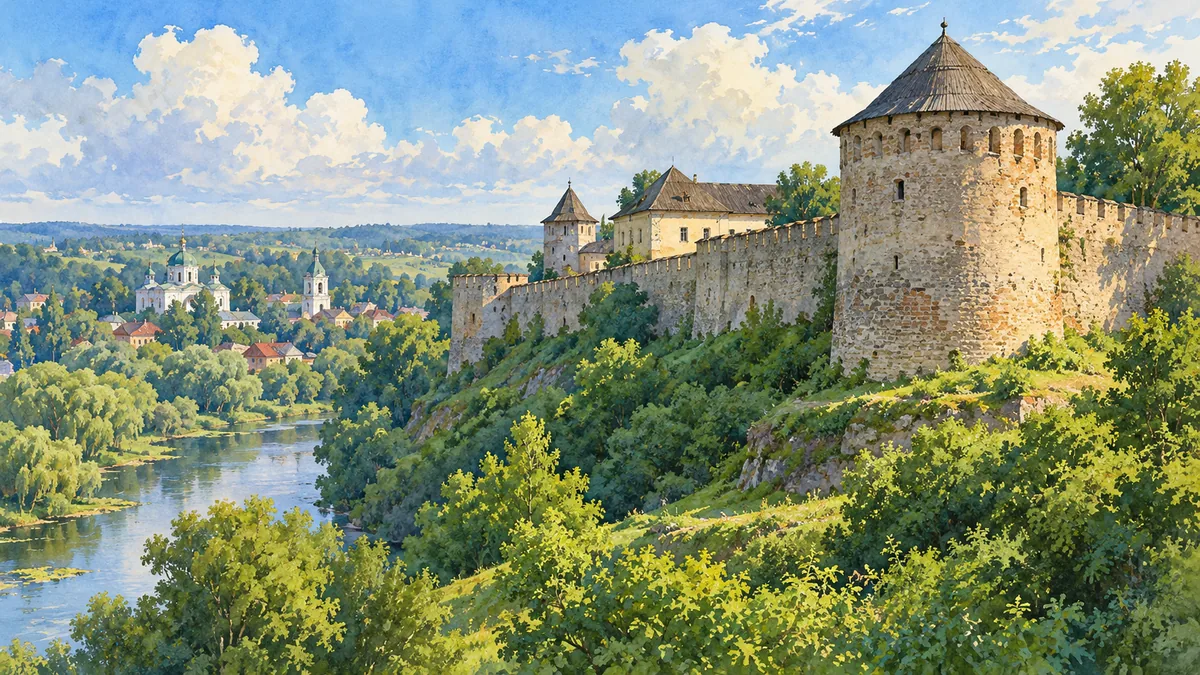
AI-generated watercolor interpretations of real places · AI-generated watercolor heritage illustrations interpret these places; they are not photographs or a record of present-day conditions.
Volhynian towns and northern forests
Rivne Oblast includes parts of historical Volhynia and the forest-and-wetland landscapes of Polisia. Its regional capital developed around a fortified settlement and became a trading town on routes linking important centres to the east and west. Lithuanian and Polish-Lithuanian rule were followed by incorporation into the Russian Empire. In the nineteenth century new railway connections changed Rivne’s scale and importance, helping turn a modest administrative town into a transport junction. The modern oblast should not be confused with the larger historical region of Volhynia, which crosses present administrative boundaries. River valleys, market centres and railway lines provide different layers of the region’s geographical story.
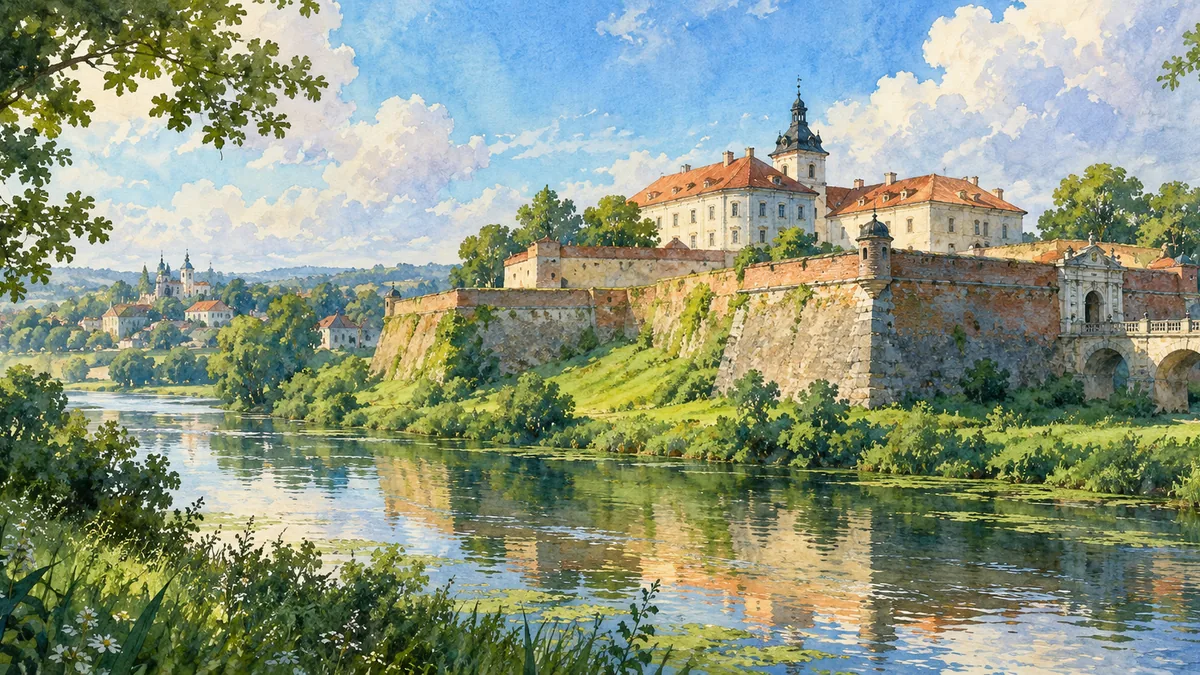
Ostroh: defence and the written word
Ostroh Castle is the highlighted landmark because it leads naturally from architecture to learning. The Ostrozky family made the town a significant cultural and religious centre. In the later sixteenth century it became home to an academy and a printing press, and the Ostroh Bible appeared in 1581. This combination of fortification, education and publishing makes the town more than a picturesque castle site. The surviving towers and churches point to a period when religious debate and written culture were closely connected with political influence. A modern institution revived the Ostroh Academy name in the 1990s, continuing the association between the town and higher education in a new historical setting.
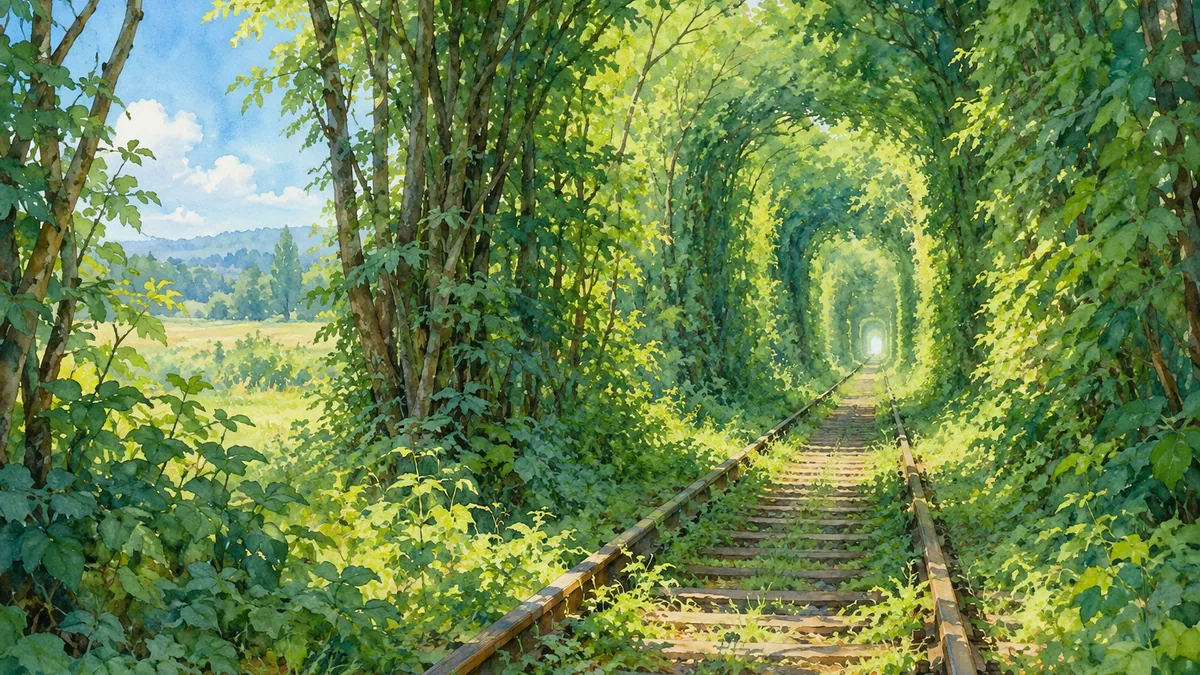
Contrasting scenes and difficult histories
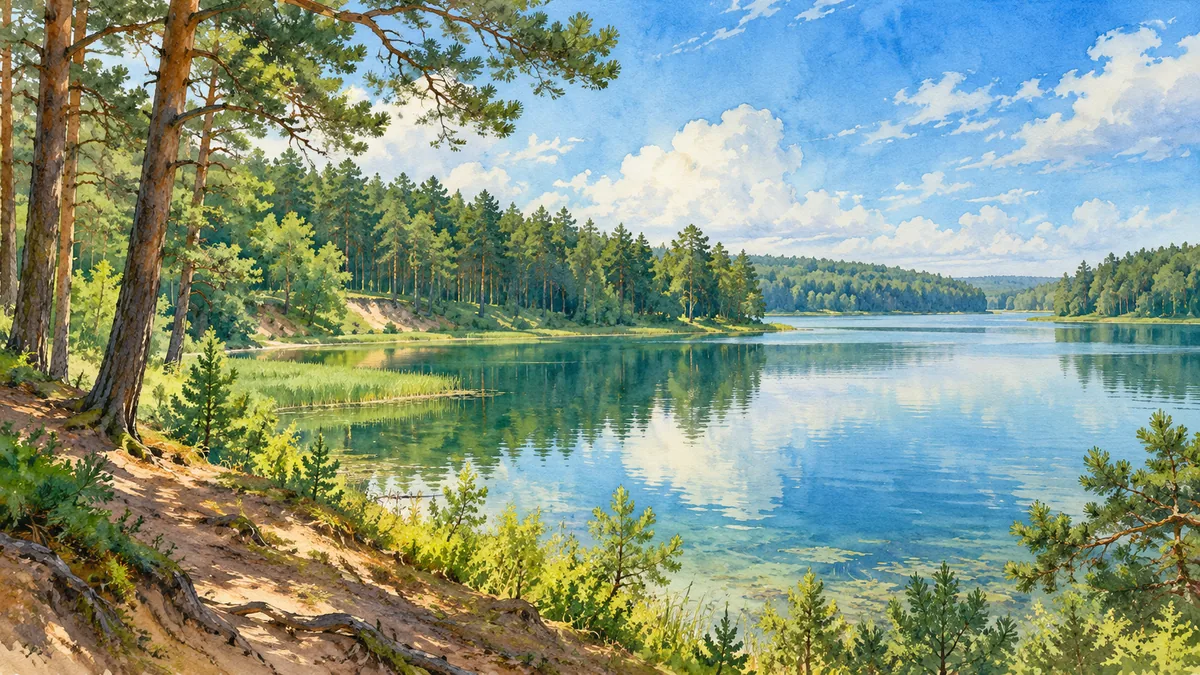
Dubno Castle, the leafy railway corridor near Klevan and the forest shore of Lake Bile show how varied Rivne Oblast can look. Fortified masonry, transport infrastructure and a natural waterside setting each reveal a different relationship between people and place. The famous green tunnel is particularly useful as a reminder that a scenic image may develop around a working human-made route, rather than around an ancient monument. Rivne became an oblast centre in 1939. During the German occupation it served as an administrative centre for Reichskommissariat Ukraine, and its Jewish population suffered mass murder. The region’s beauty should therefore be held alongside its history of occupation and loss, not used to replace it.
Historical sources & artwork notes
AI-generated watercolor heritage illustrations interpret these places; they are not photographs or a record of present-day conditions.