Odesa Oblast — History and Landmarks
Одеська область
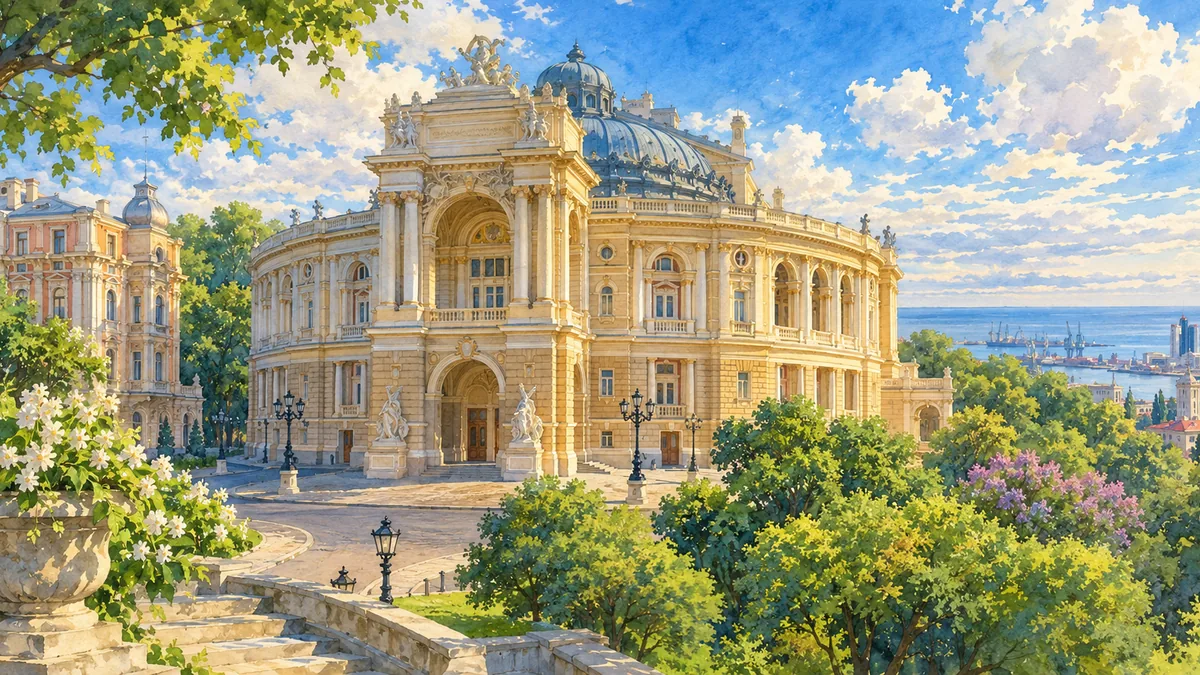
AI-generated watercolor interpretations of real places · AI-generated watercolor heritage illustrations interpret these places; they are not photographs or a record of present-day conditions.
A region wider than its famous city
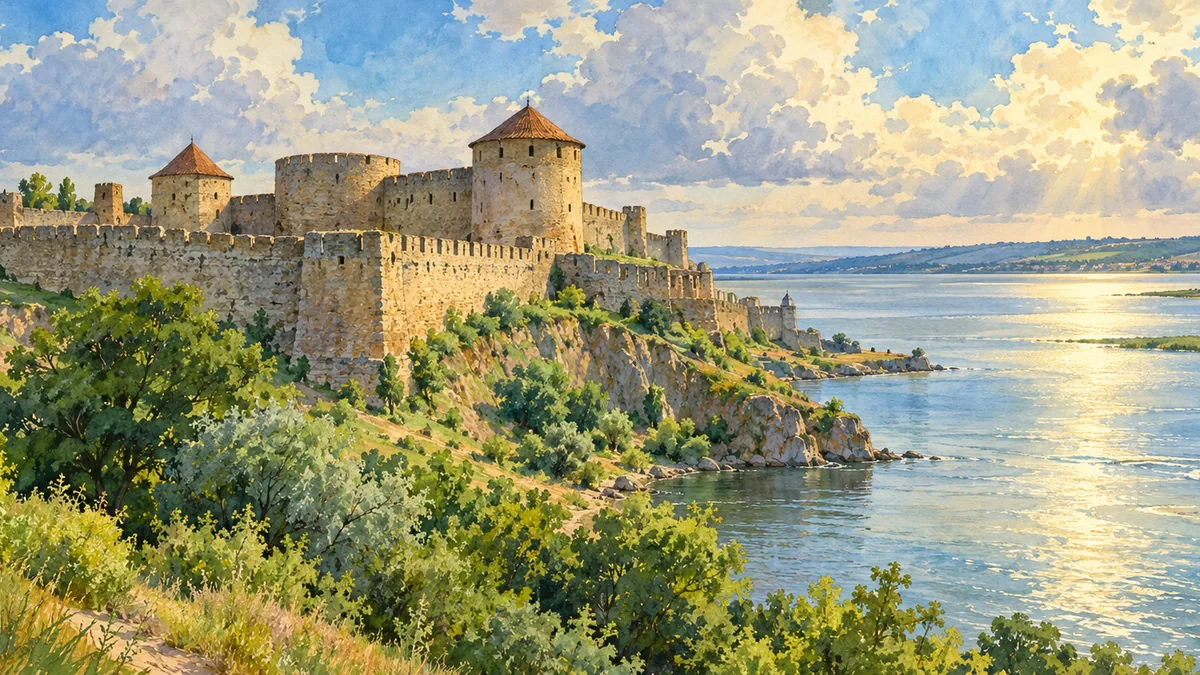
Odesa Oblast includes the city of Odesa, coastal estuaries and the southern lands extending toward the Danube. Its history cannot be reduced to the founding of one modern port. Bilhorod-Dnistrovskyi stands at the site of ancient Tyras and later passed through a succession of political and cultural settings. Its names, including Akkerman and Cetatea Albă, preserve traces of those changes. The fortress overlooking the Dnister estuary makes this layered past visible. The wider region has been home to Ukrainian, Jewish, Bulgarian, Moldovan, Romanian and other communities. Boundaries and administrations changed, while waterways continued to connect the region to surrounding lands and the Black Sea.
Odesa: port, planning and culture
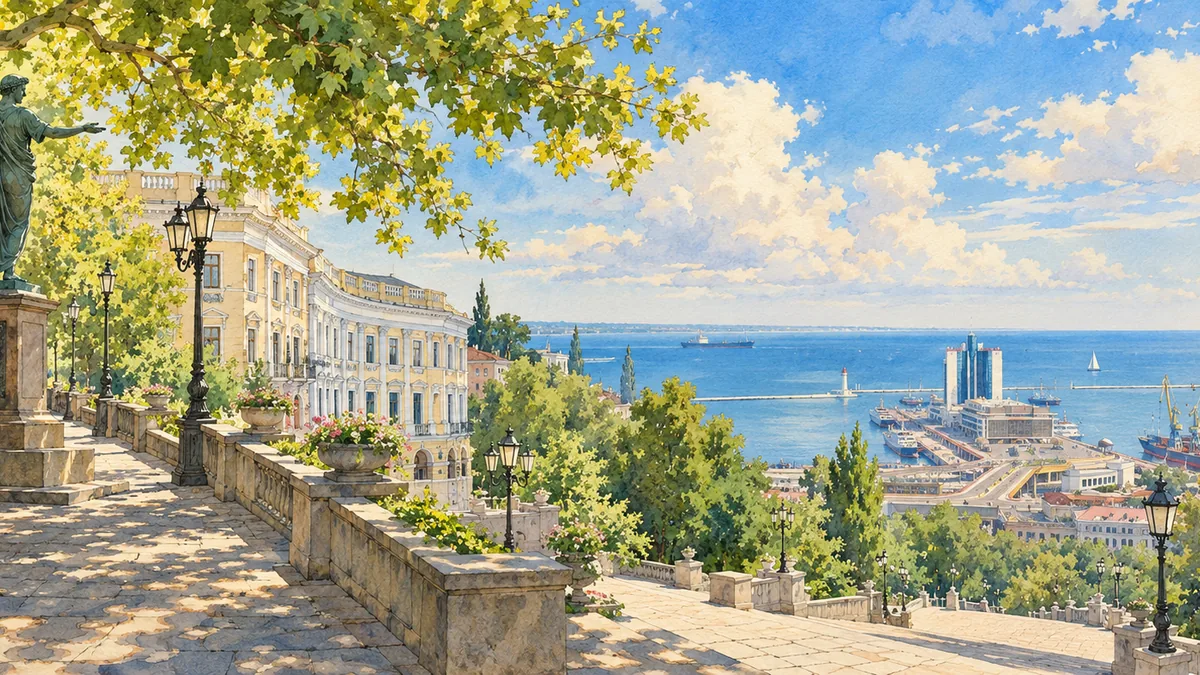
The modern city of Odesa grew rapidly as a Black Sea port under Russian imperial rule. Its planned streets, elevated central district and monumental connection between boulevard and harbour helped give it a distinctive urban form. Rail links strengthened connections with the agricultural interior during the nineteenth century. Trade and migration supported a varied cultural life, including Ukrainian publishing and educational organizations alongside other linguistic traditions. The Opera and Ballet Theatre is a useful visual introduction, but the city’s history also belongs to workers, merchants, writers and neighbourhood communities. The waterfront and the streets above it tell related stories about commerce, ambition and the movement of people.

Fortress, estuary and delta
Bilhorod-Dnistrovskyi’s surviving fortress recalls a period when control of an estuary had political and commercial importance. Its stone walls should be understood alongside the older archaeological layers around them, rather than as the beginning of the settlement’s story. Elsewhere, the Danube Delta offers a landscape of channels, reeds and waterside settlements. Pairing these scenes with Odesa’s formal architecture reveals a region of contrasts: maritime city, older fortified town and wetland environment. These illustrations are intended as cultural and geographical portraits, not as reports of present conditions. Learning the regional name becomes more meaningful when several different places can be pictured behind it.
Historical sources & artwork notes
AI-generated watercolor heritage illustrations interpret these places; they are not photographs or a record of present-day conditions.