Lviv Oblast — History and Landmarks
Львівська область
AI-generated watercolor interpretations of real places · AI-generated watercolor heritage illustrations interpret these places; they are not photographs or a record of present-day conditions.
A city at a cultural crossroads
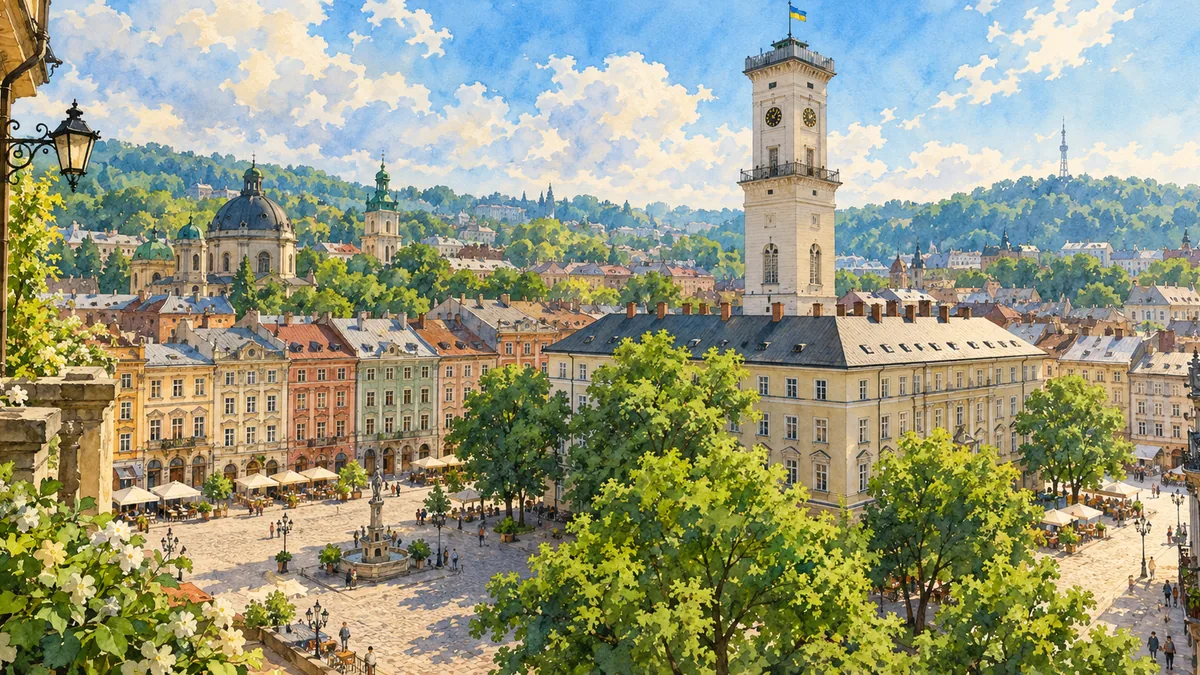
Lviv grew from a medieval settlement into one of the principal urban centres of western Ukraine. Its location connected routes across eastern and central Europe, and its inhabitants included Ukrainian, Polish, Armenian and Jewish communities. Successive governments and religious traditions left distinct marks on the city. The historic centre preserves a medieval street pattern alongside buildings rebuilt or remodelled in later styles. Rynok Square, with its town hall and varied house fronts, is an effective starting image because it places commerce, civic government and domestic life within one compact space. The city’s history is not only the history of rulers; it is also the accumulated work of merchants, craftspeople, builders and residents.
An urban landscape with many layers
Lviv became part of the Habsburg monarchy after the first partition of Poland in 1772. During the nineteenth century it developed as a major centre of education, publishing and public debate, including a growing Ukrainian national movement. The twentieth century brought competing national claims, war, Soviet rule and immense human losses. The Holocaust destroyed the city’s Jewish community, and postwar population transfers transformed its social composition. The historic centre’s World Heritage recognition reflects its architectural and urban significance, but surviving streets cannot by themselves make all of those experiences visible. Reading the city requires attention to both what remains and the people and institutions that disappeared.
The oblast beyond the city
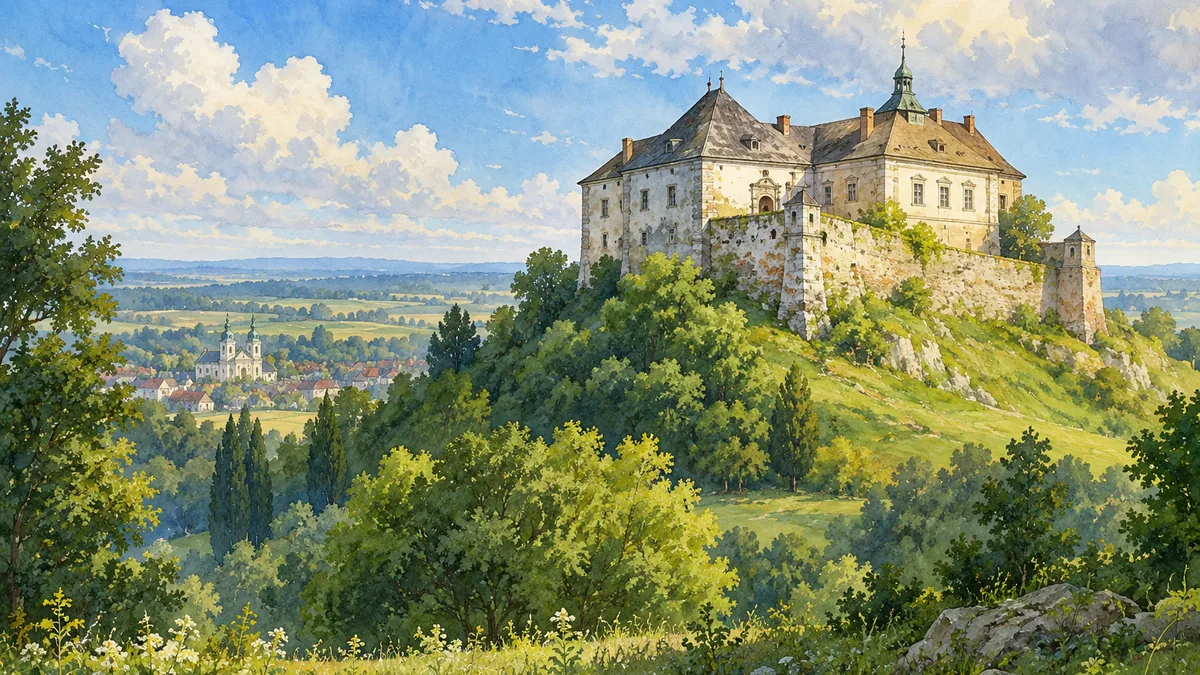
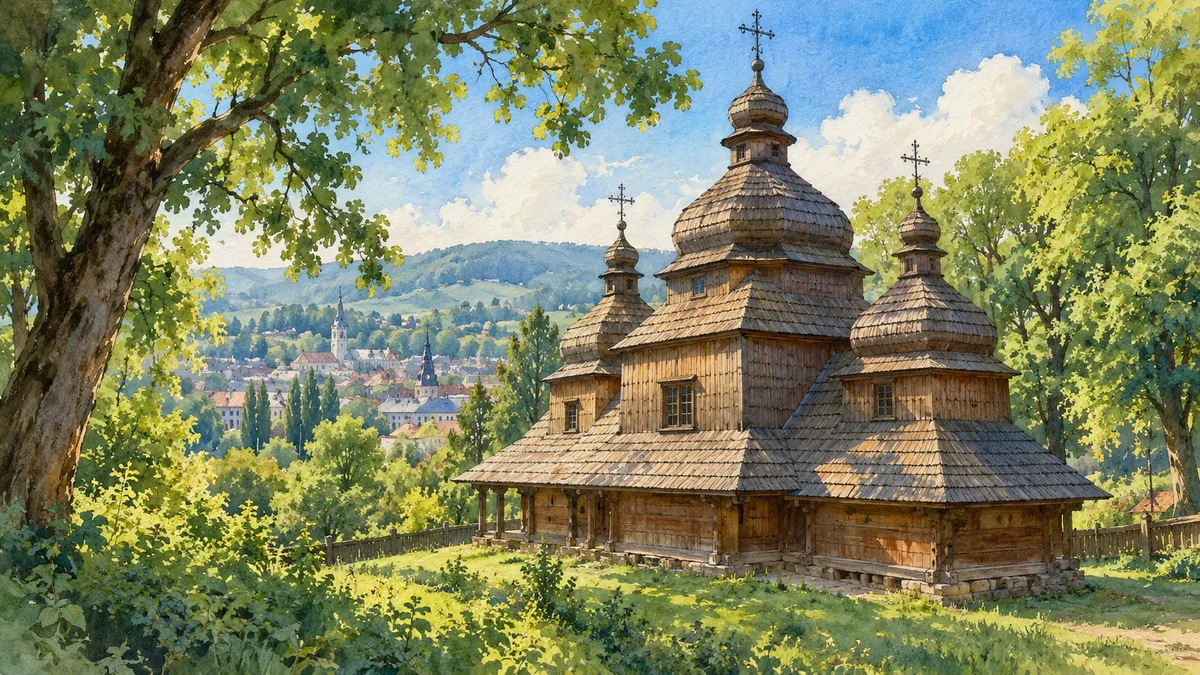
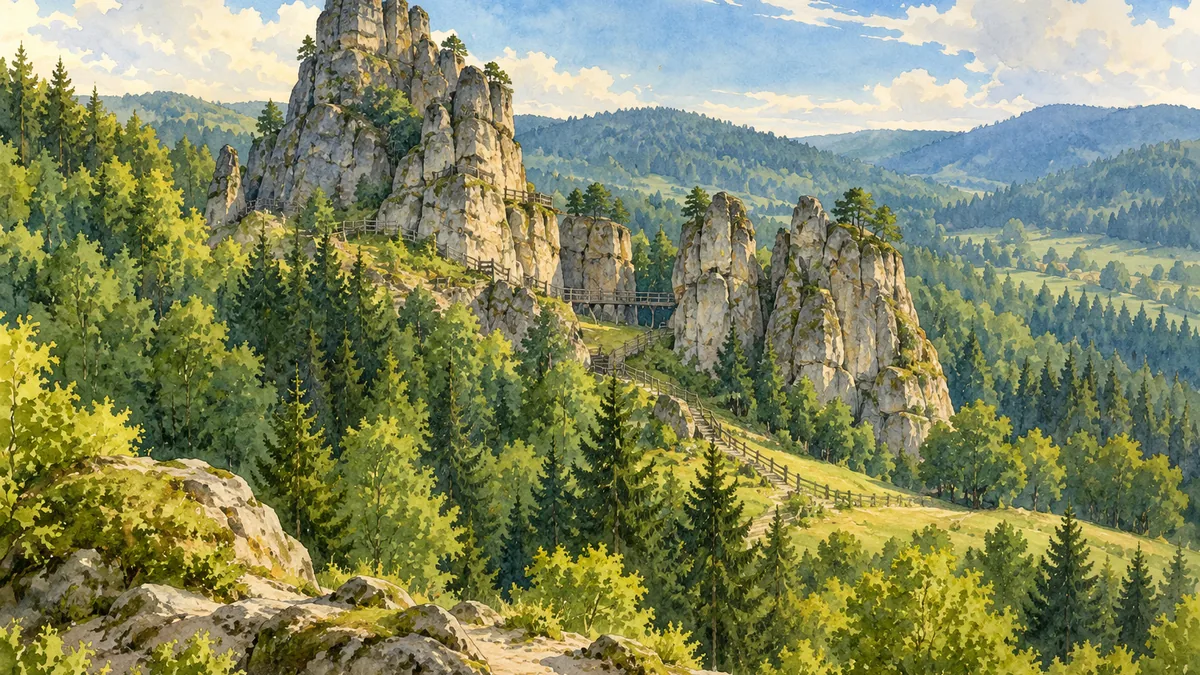
Lviv Oblast extends beyond the famous urban centre into castle country, smaller towns and the Carpathian foothills. Olesko Castle introduces an aristocratic and defensive landscape; the wooden Church of Saint George in Drohobych represents a different tradition of religious craftsmanship. It is included among the UNESCO-listed Carpathian wooden tserkvas. At Tustan near Urych, striking sandstone formations show how natural rock could shape a fortified site and its setting. These three views offer a useful contrast with the closely built streets of Lviv. The modern oblast is an administrative unit, while Galicia is a much broader historical region. Keeping that distinction in mind helps connect local landmarks without treating every western Ukrainian place as part of one identical story.
Historical sources & artwork notes
AI-generated watercolor heritage illustrations interpret these places; they are not photographs or a record of present-day conditions.