Kyiv city — History and Landmarks
Київ
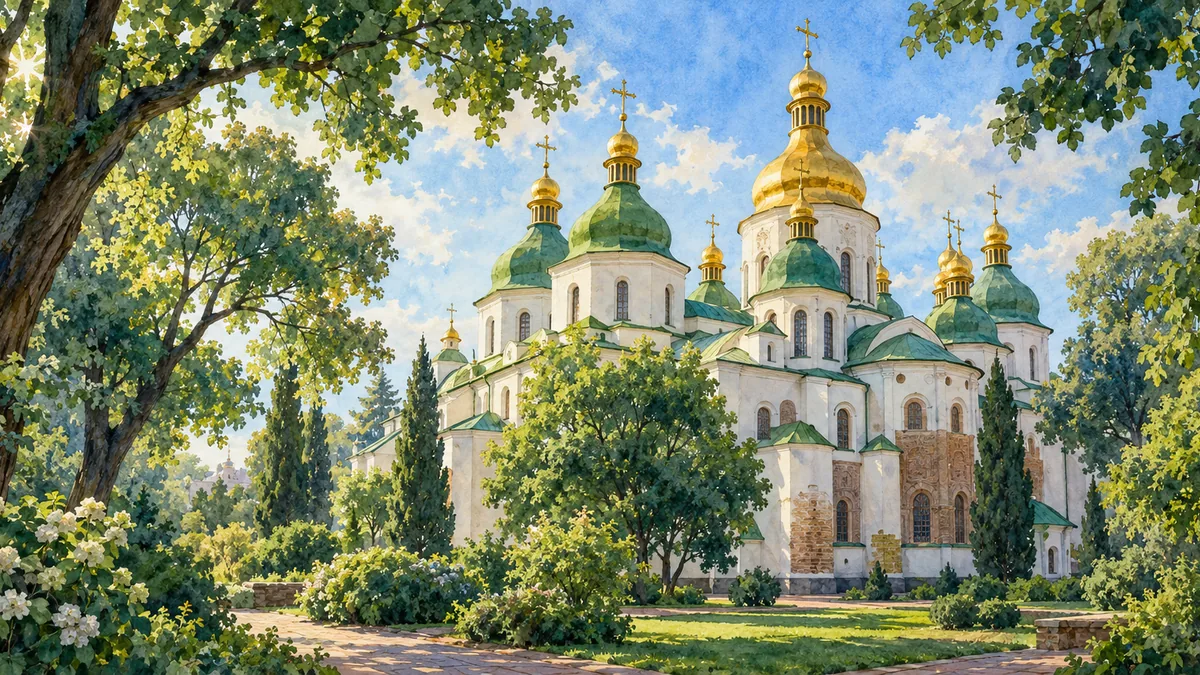
AI-generated watercolor interpretations of real places · AI-generated watercolor heritage illustrations interpret these places; they are not photographs or a record of present-day conditions.
A capital above the Dnipro
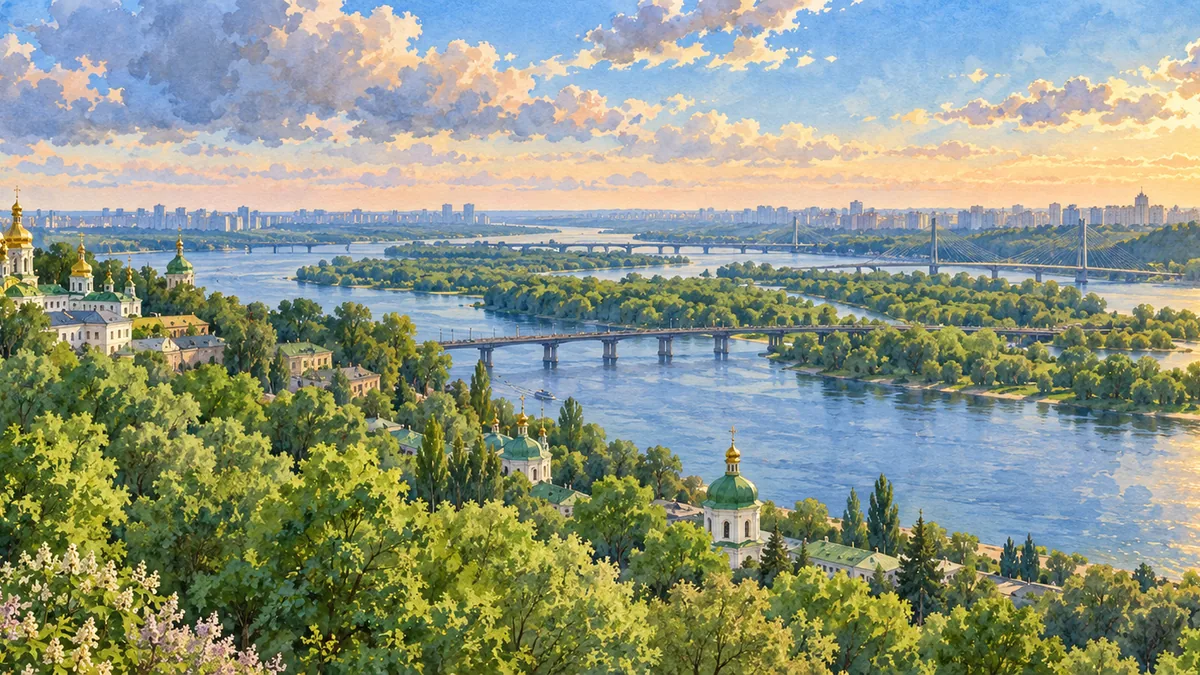
Kyiv is Ukraine’s capital and a city with a separate administrative status from the surrounding Kyiv Oblast. Its hills, river crossings and lower trading districts helped shape its growth. In the medieval period it became a leading centre of Kyivan Rus, connecting political authority, religious institutions and long-distance exchange. Later centuries brought changes of rule, destruction and rebuilding, but the city retained a powerful place in Ukrainian cultural and political life. The Dnipro remains essential to its identity. A view from the right-bank hills toward the river and islands connects the modern city with the physical setting that influenced its earlier development.
Saint Sophia and a layered architectural language
Saint Sophia Cathedral is a key monument of medieval Kyiv. Its surviving mosaics and frescoes preserve evidence of the artistic and religious world in which it was created. The exterior seen today also reflects later changes, especially the Ukrainian Baroque transformation of the complex. This layering matters: historic buildings are not always the work of a single moment. UNESCO recognizes Saint Sophia and its related monastic buildings together with Kyiv-Pechersk Lavra as a World Heritage property. The cathedral’s domes and courtyard make a strong visual landmark, while its interior and associated buildings reveal the deeper historical significance behind that familiar skyline.
Monasteries, neighbourhoods and living history
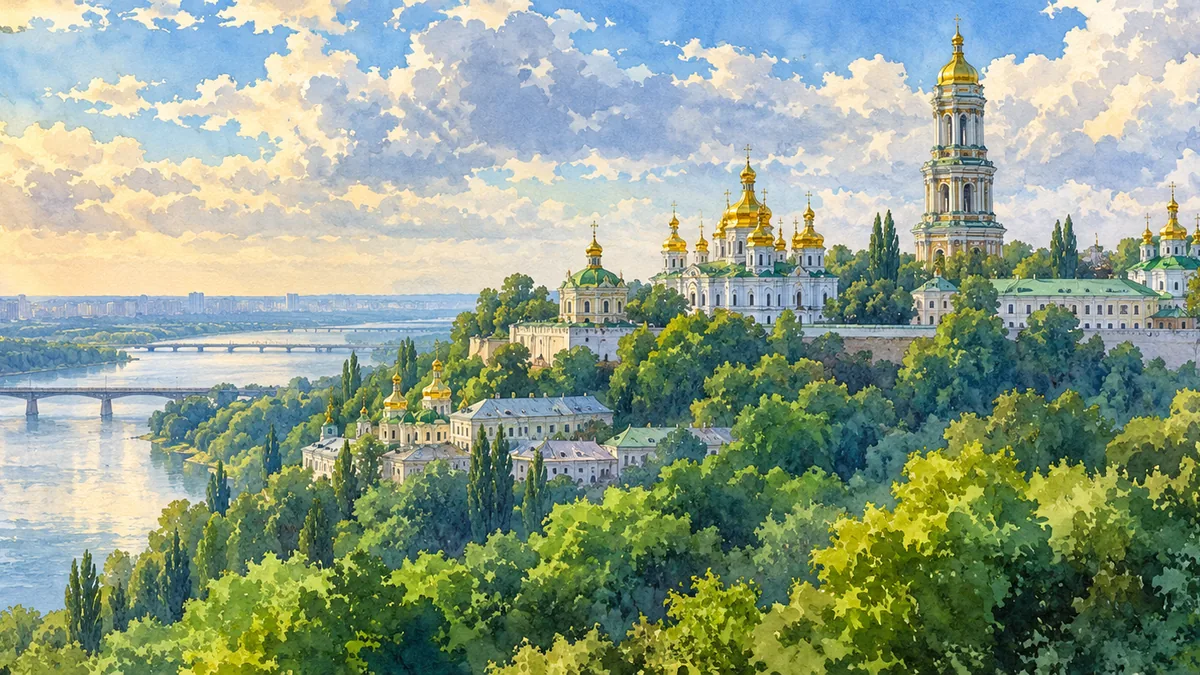
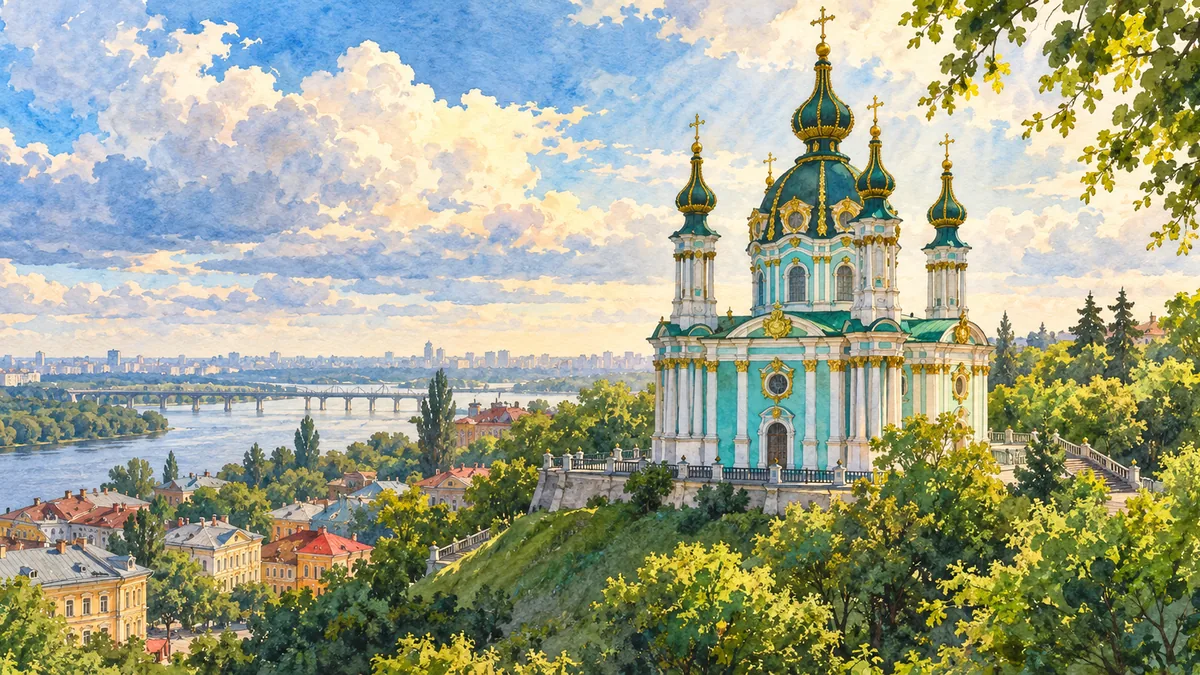
Kyiv-Pechersk Lavra developed from a monastic foundation into a major religious and cultural centre. Its caves, churches and later monumental buildings form a complex landscape above the Dnipro. Elsewhere, Saint Andrew’s Church and the streets around it introduce another part of the city’s architectural story. Kyiv cannot be understood only through sacred monuments, however. Markets, workshops, educational institutions, publishing and neighbourhood communities also shaped its history. The city’s built environment brings those experiences into close proximity. These watercolor illustrations offer recognizable entrances to that layered past; they are artistic interpretations, not condition surveys or a claim that the city has remained unchanged through time.
Historical sources & artwork notes
AI-generated watercolor heritage illustrations interpret these places; they are not photographs or a record of present-day conditions.