Kirovohrad Oblast — History and Landmarks
Кіровоградська область
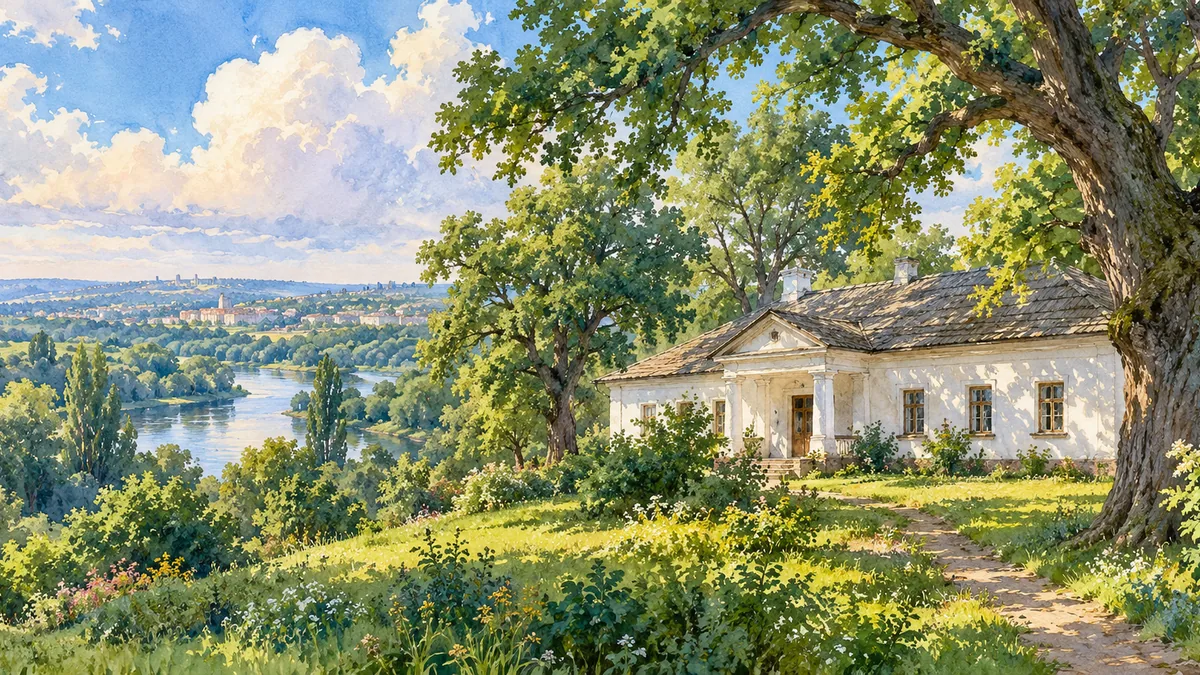
AI-generated watercolor interpretations of real places · AI-generated watercolor heritage illustrations interpret these places; they are not photographs or a record of present-day conditions.
Central Ukraine, several historical layers
Kirovohrad Oblast lies in central Ukraine, where cultivated fields, river valleys and patches of woodland meet the steppe. The modern region was assembled in 1939 from districts previously administered by several neighbouring oblasts. That recent administrative date should not obscure the much older settlement history of the area. Archaeological remains, rural communities and changing political frontiers all belong to its past. A modern map gathers these varied places into one unit, but it does not make them historically identical. The region can be understood as a meeting ground between routes, farming landscapes and the towns that developed to serve and govern them.
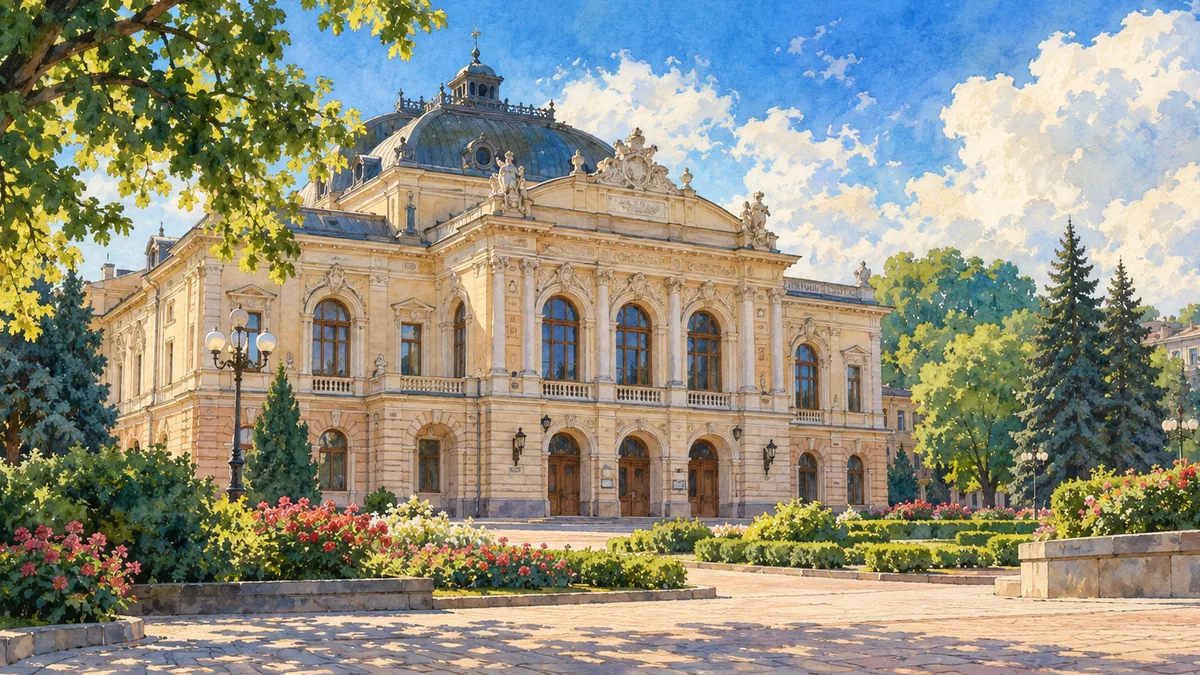
Kropyvnytskyi and the Ukrainian stage
The regional centre, Kropyvnytskyi, grew around an eighteenth-century imperial fortress and became a commercial and cultural town. Its strongest associations include the development of professional Ukrainian theatre. Figures such as Marko Kropyvnytskyi, Ivan Karpenko-Kary, Mykola Sadovskyi, Panas Saksahanskyi and Mariia Zankovetska contributed to a stage culture that helped carry Ukrainian language and social experience to audiences. The city’s present name commemorates Kropyvnytskyi. The oblast and its capital have different names, a useful detail for language learners. Theatre also expands the idea of a landmark: its meaning lies in performances and people as much as in the shape of a building.
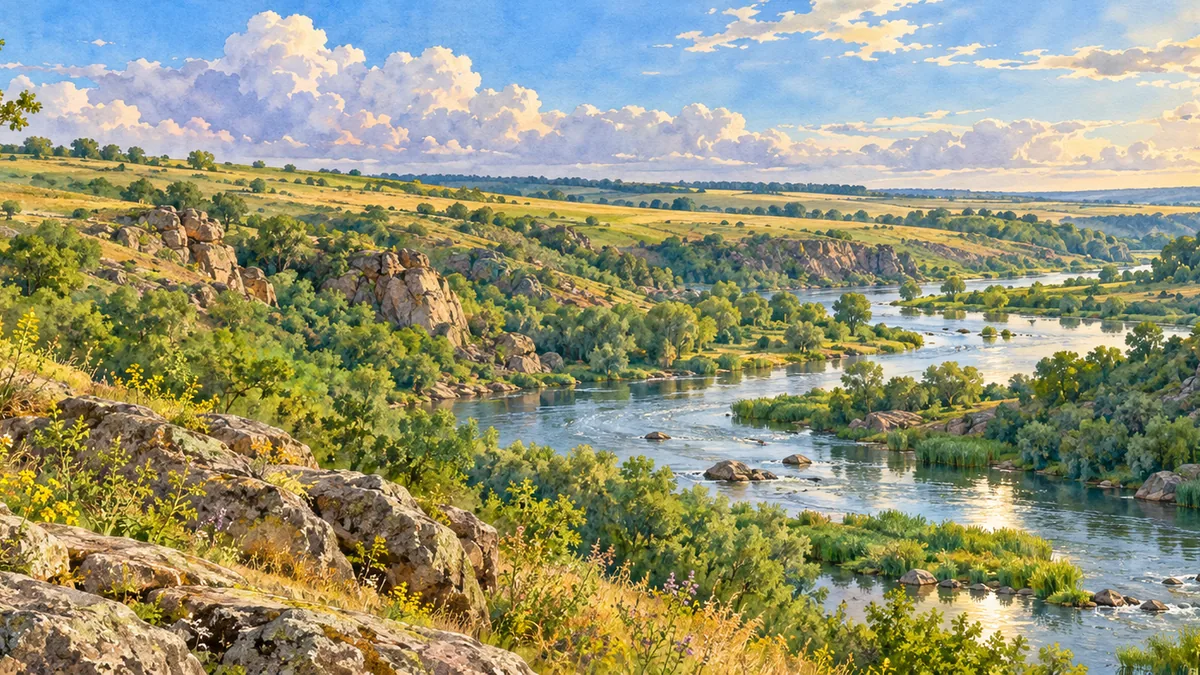
Khutir Nadiia and the quieter landscape
Khutir Nadiia is associated with the family and creative life of playwright Ivan Karpenko-Kary, whose family name was Tobilevych. The estate is preserved as a museum site, linking the history of Ukrainian drama with a domestic rural setting. Its trees, simple buildings and garden spaces suggest a different scale from a city theatre. This is a place where cultural history can be approached through work, family life and the surroundings of a writer. Nearby steppe valleys and the Chornyi Lis woodland provide a broader landscape context. They remind the reader that the history of central Ukraine includes countryside and small settlements as well as its administrative centre.
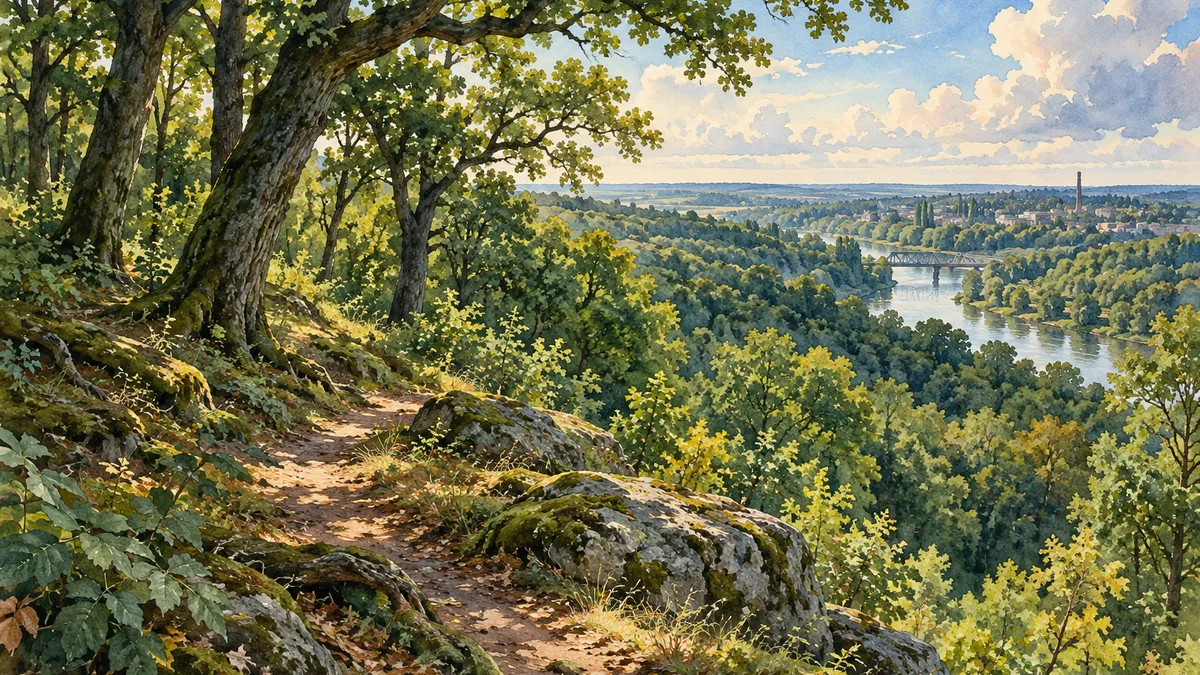
Historical sources & artwork notes
AI-generated watercolor heritage illustrations interpret these places; they are not photographs or a record of present-day conditions.