Chernivtsi Oblast — History and Landmarks
Чернівецька область
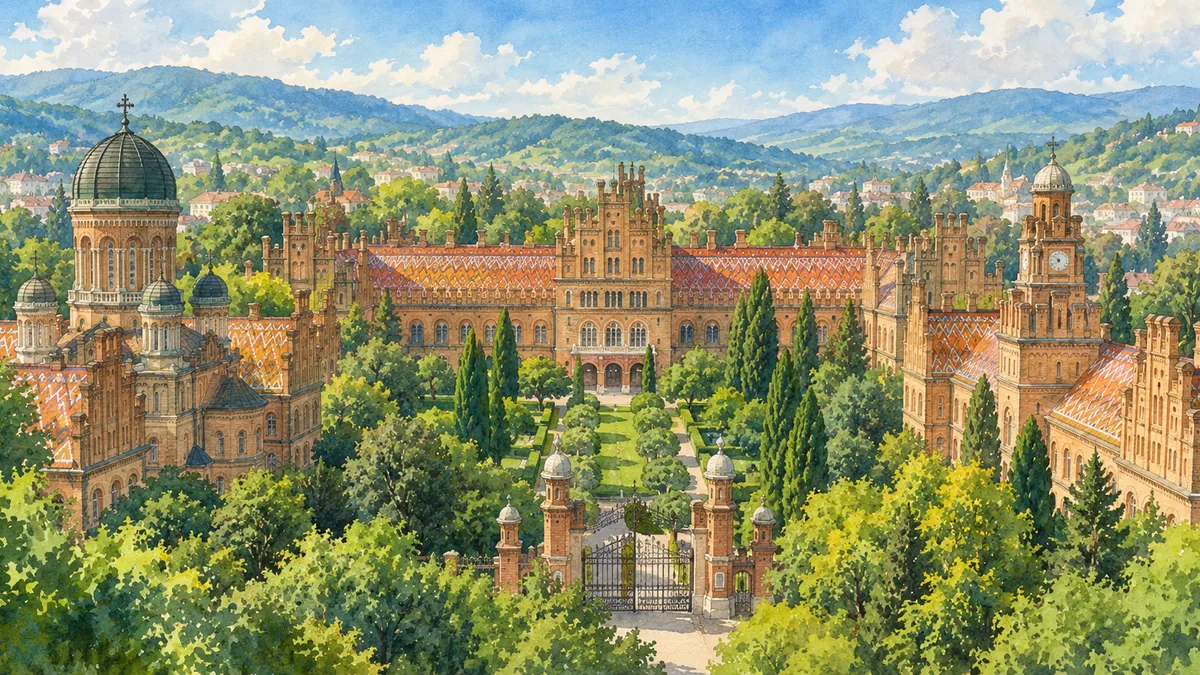
AI-generated watercolor interpretations of real places · AI-generated watercolor heritage illustrations interpret these places; they are not photographs or a record of present-day conditions.
Bukovyna and the modern oblast
Chernivtsi Oblast contains northern Bukovyna together with neighbouring historical territories; it is not identical to the whole of Bukovyna, which also extends into Romania. Chernivtsi developed as a trading and customs centre in the Moldavian principality, with a documented reference in 1408. Later Habsburg rule connected the city to a different administrative and cultural world. Ukrainian, Romanian, Jewish, German and Polish communities all contributed to its urban life. This diversity is essential to understanding the region, but it should not be presented as an uninterrupted story of harmony. Different governments and national movements created both opportunities and conflicts, leaving a complex inheritance in language, architecture and memory.
A residence that became a university
The former Residence of Bukovinian and Dalmatian Metropolitans is the main landmark on this page. Designed by the Czech architect Josef Hlávka and built between 1864 and 1882, the complex combines several architectural traditions in red brick, patterned roof tiles and carefully arranged courtyards. Its church, educational buildings, garden and park formed part of an institutional ensemble, not simply a private palace. The site later became part of Chernivtsi National University and entered the UNESCO World Heritage List in 2011. The change of use is a reminder that important buildings can retain their architectural identity while serving new communities and purposes. Its distinctive roof patterns make it especially recognizable in an illustration.
From the Dnister to the Carpathians
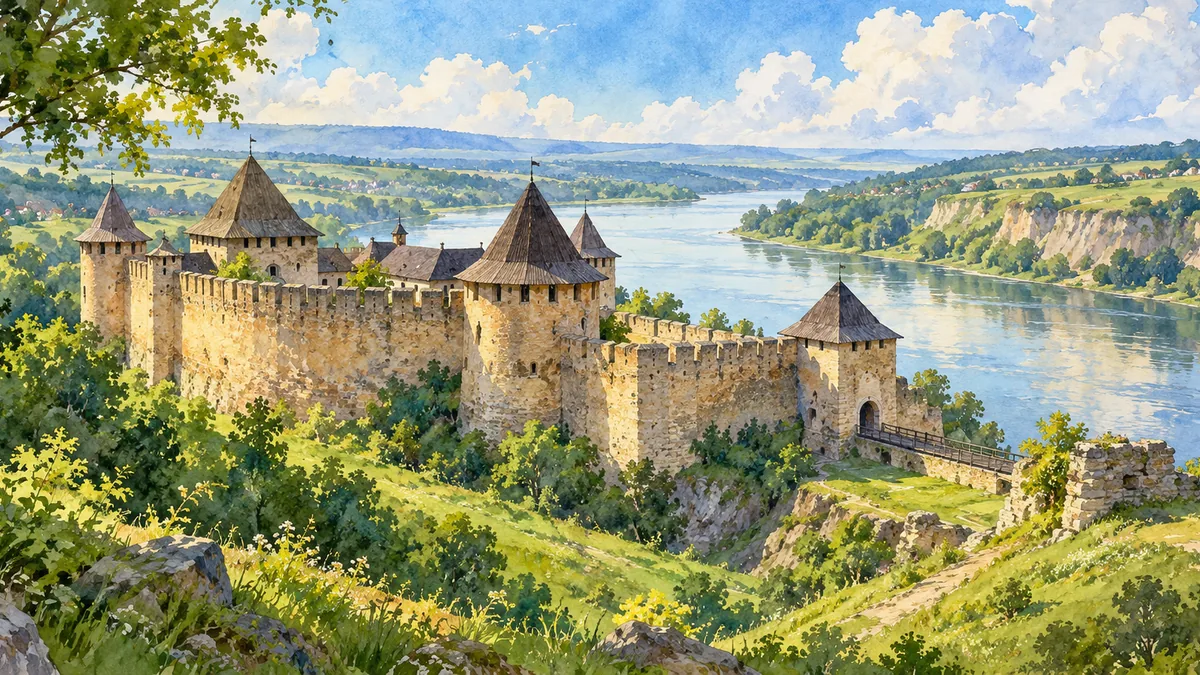
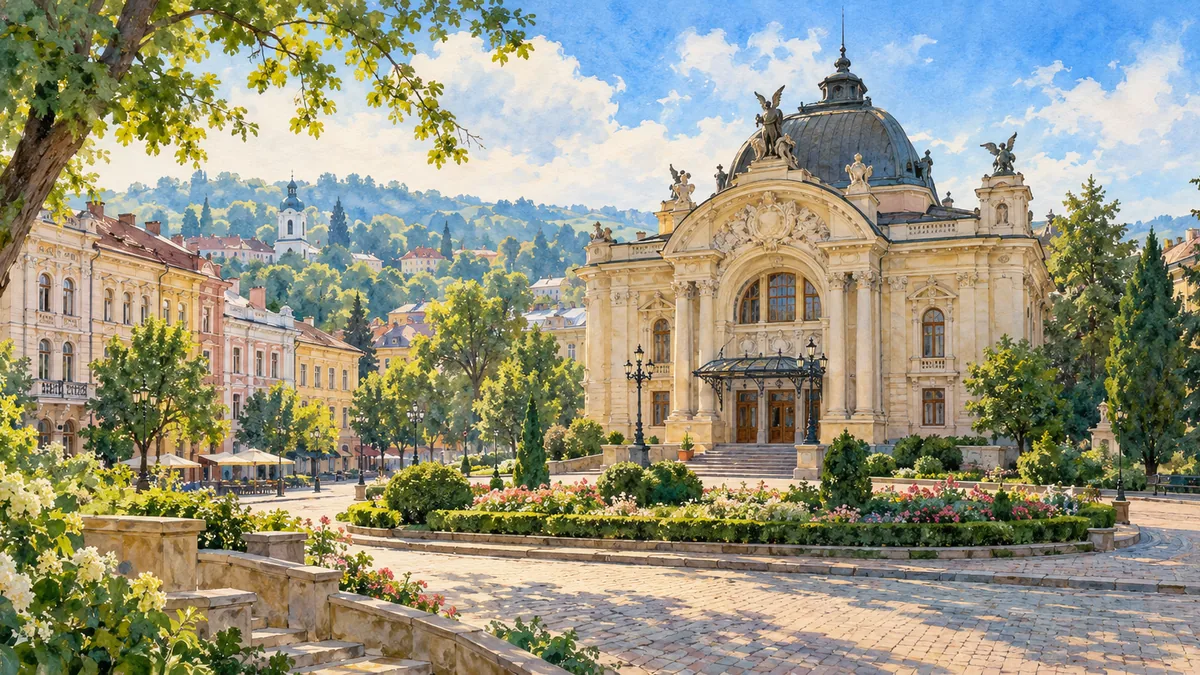
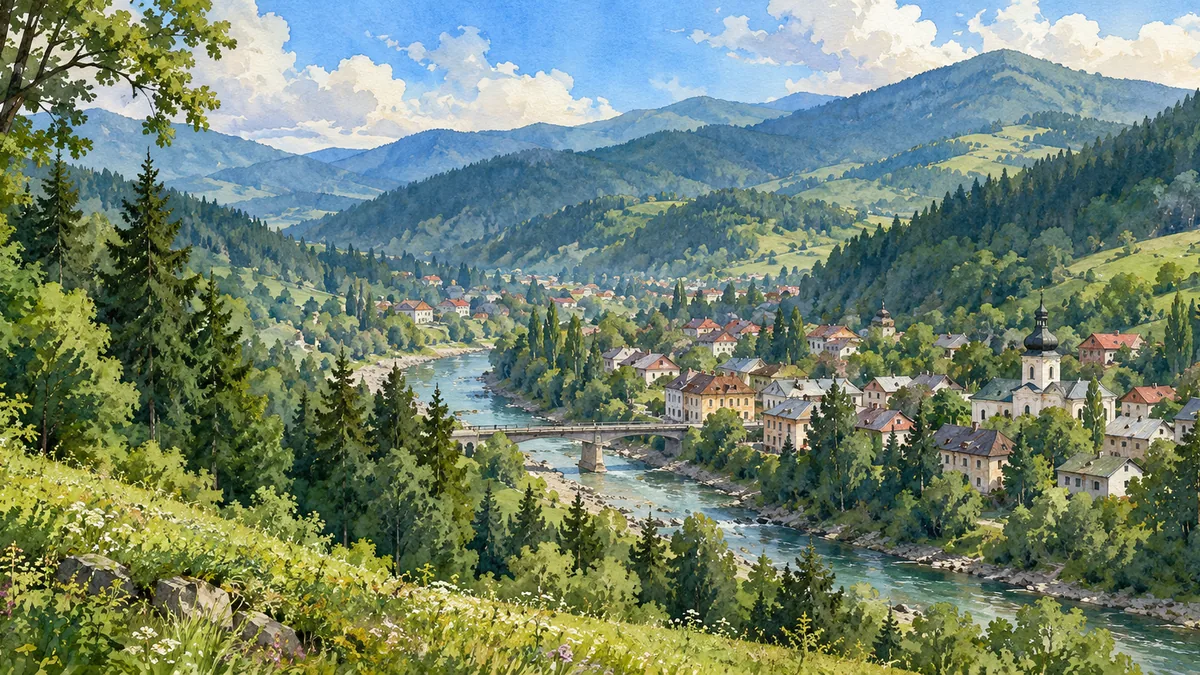
Khotyn Fortress, Chernivtsi’s theatre square and the forested hills around Vyzhnytsia offer three contrasting introductions to the oblast. Khotyn faces the Dnister and evokes a history of strategic river crossings and contested borders. The theatre square presents a civic and cultural urban landscape. Vyzhnytsia draws attention to the Carpathian edge of the region, where wooded slopes and valleys shape settlement. Twentieth-century history brought Romanian rule, Soviet annexation, war and the destruction and displacement of communities, including the Holocaust. These experiences belong beside the celebrated architecture. The page’s paintings are imaginative interpretations of real sites; their role is to make places memorable while the text supplies context that a beautiful view alone cannot convey.
Historical sources & artwork notes
AI-generated watercolor heritage illustrations interpret these places; they are not photographs or a record of present-day conditions.