Kharkiv Oblast — History and Landmarks
Харківська область
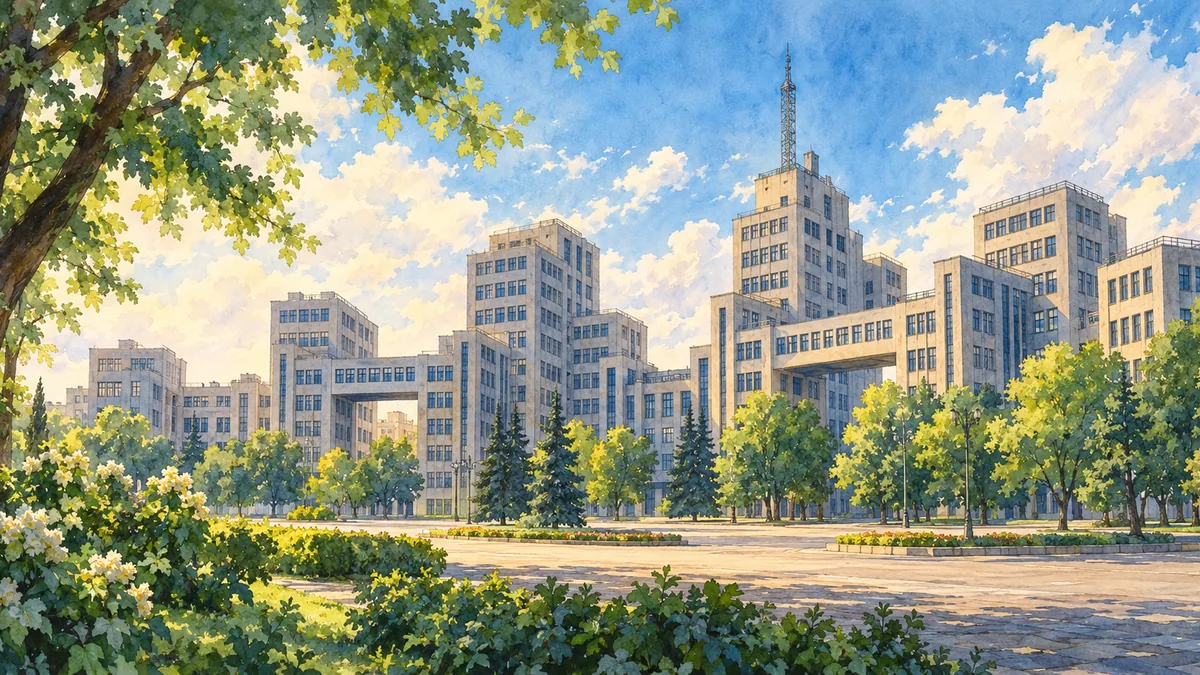
AI-generated watercolor interpretations of real places · Watercolor heritage illustrations interpret these places; they are not photographs or a record of their present condition.
A center of Slobidska Ukraine
Kharkiv grew within Slobidska Ukraine, a historical frontier region associated with settlements known as slobody. During the seventeenth century, Ukrainian Cossacks and settlers established communities here amid shifting political and military pressures. Kharkiv’s conventional founding date falls in the mid-1650s, when a fortified settlement developed near the Kharkiv and Lopan rivers. It became a regimental center and later an important market town. The wider historical region does not match the boundaries of today’s Kharkiv Oblast exactly. Remembering that distinction helps explain why histories of neighboring regions overlap, and why a place name can describe an administrative unit, a city or a broader cultural landscape.

Learning, literature and a modern capital
Kharkiv University opened in 1805 and helped make the city an important center of education and scholarship. During the nineteenth century, publishing and literary activity contributed to the Ukrainian cultural revival. Trade, railways and manufacturing also expanded, giving the city several connected roles rather than a single identity. In the early Soviet period, Kharkiv served as the capital of Soviet Ukraine until the transfer to Kyiv in 1934. That era brought ambitious construction and cultural experimentation, but also repression. The history of Ukrainian intellectual life here includes both remarkable creative energy and the violent destruction of institutions and individual lives under Stalinist rule.
Reading the city through its buildings
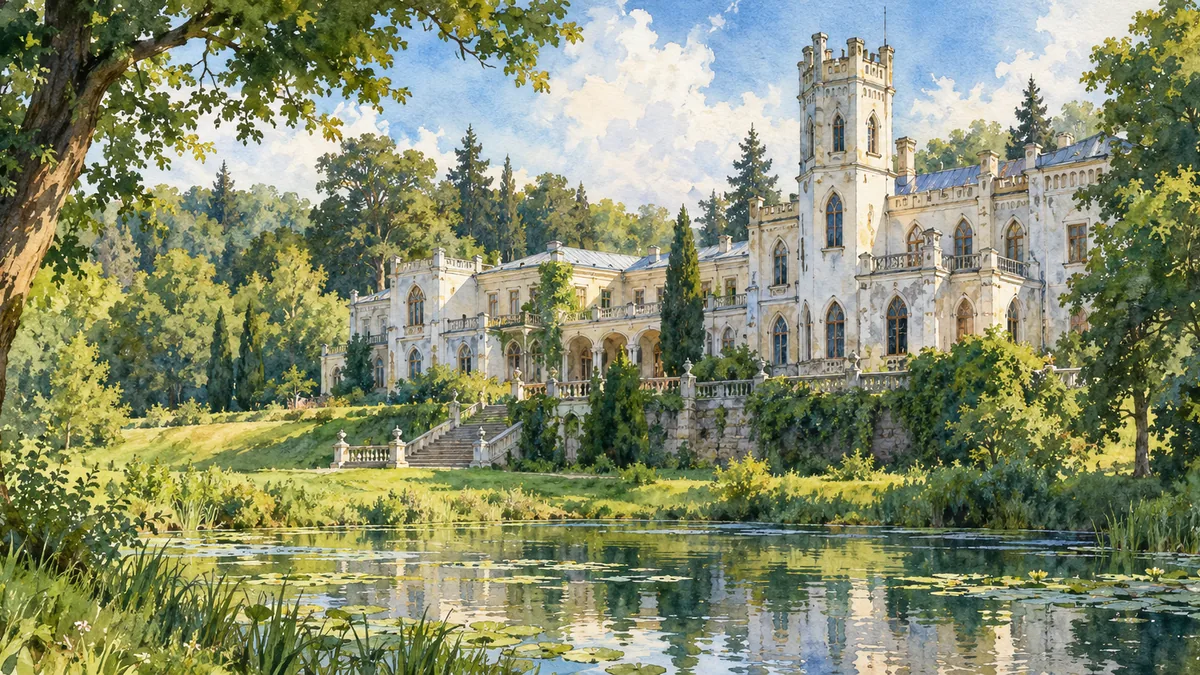
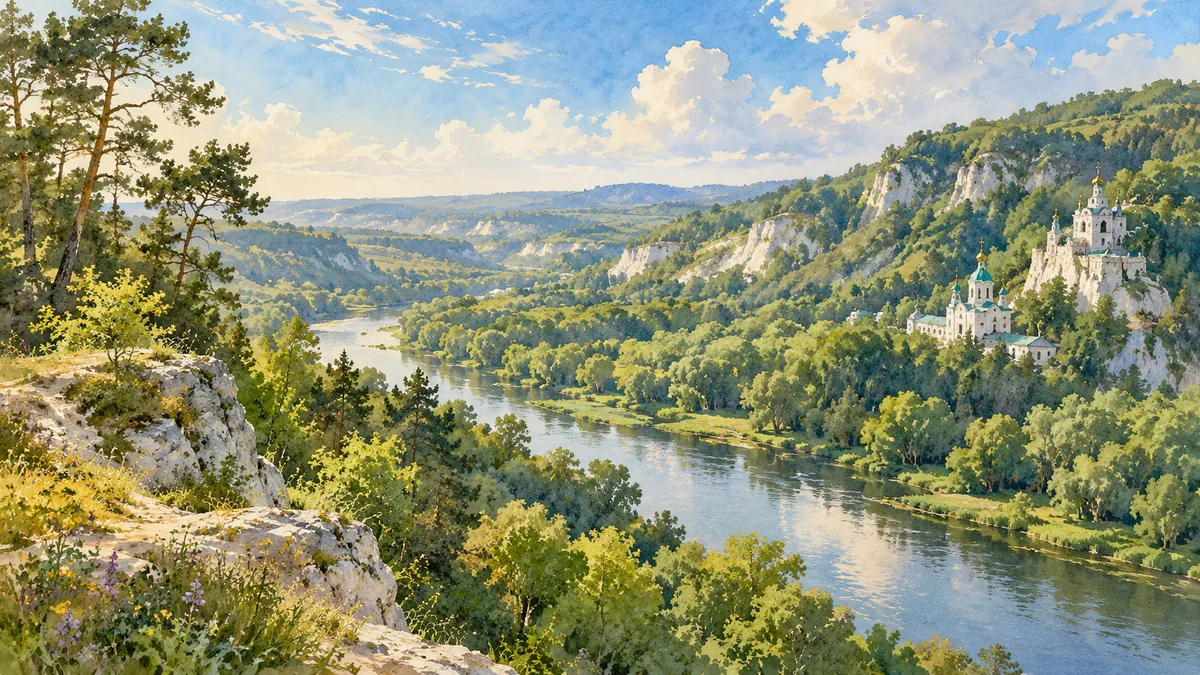
Derzhprom, constructed in 1925–1928, is a striking example of Constructivist architecture. Its linked blocks, elevated connections and strong geometric forms express a very different architectural language from a palace or cathedral. It stands as a landmark of Kharkiv’s modernist period, and is on Ukraine’s UNESCO World Heritage Tentative List, not the inscribed World Heritage List. Beyond the city, estate landscapes such as Sharivka and the wooded Siverskyi Donets valley introduce other parts of the oblast’s heritage. Derzhprom has suffered wartime damage. The illustrations here intentionally present heritage views and should not be read as photographs or confirmation of the current condition of buildings.
Historical sources & artwork notes
Watercolor heritage illustrations interpret these places; they are not photographs or a record of their present condition.