Dnipropetrovsk Oblast — History and Landmarks
Дніпропетровська область
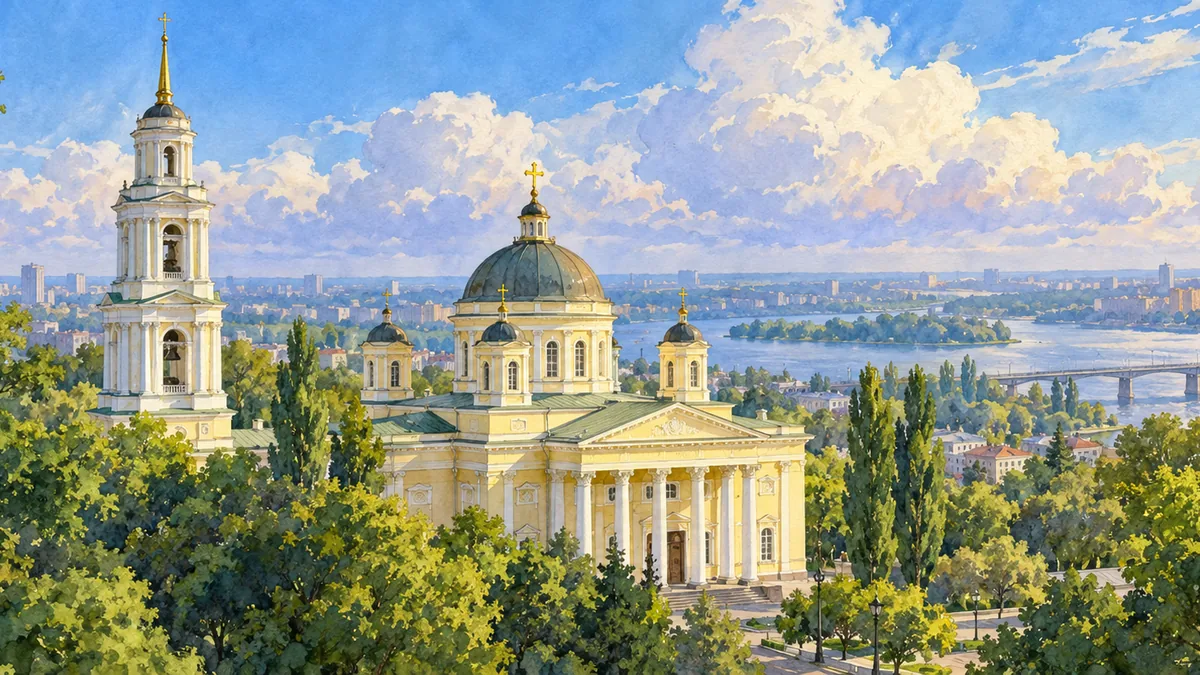
AI-generated watercolor interpretations of real places · AI-generated watercolor heritage illustrations interpret these places; they are not photographs or a record of present-day conditions.
A river and the steppe
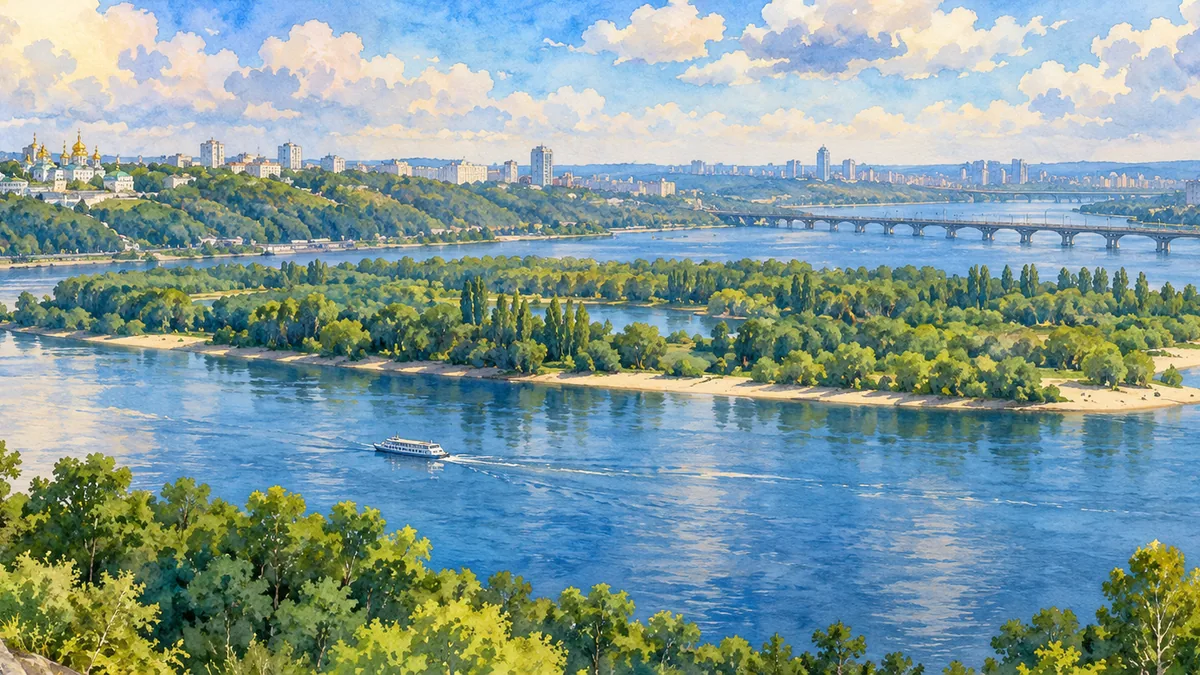
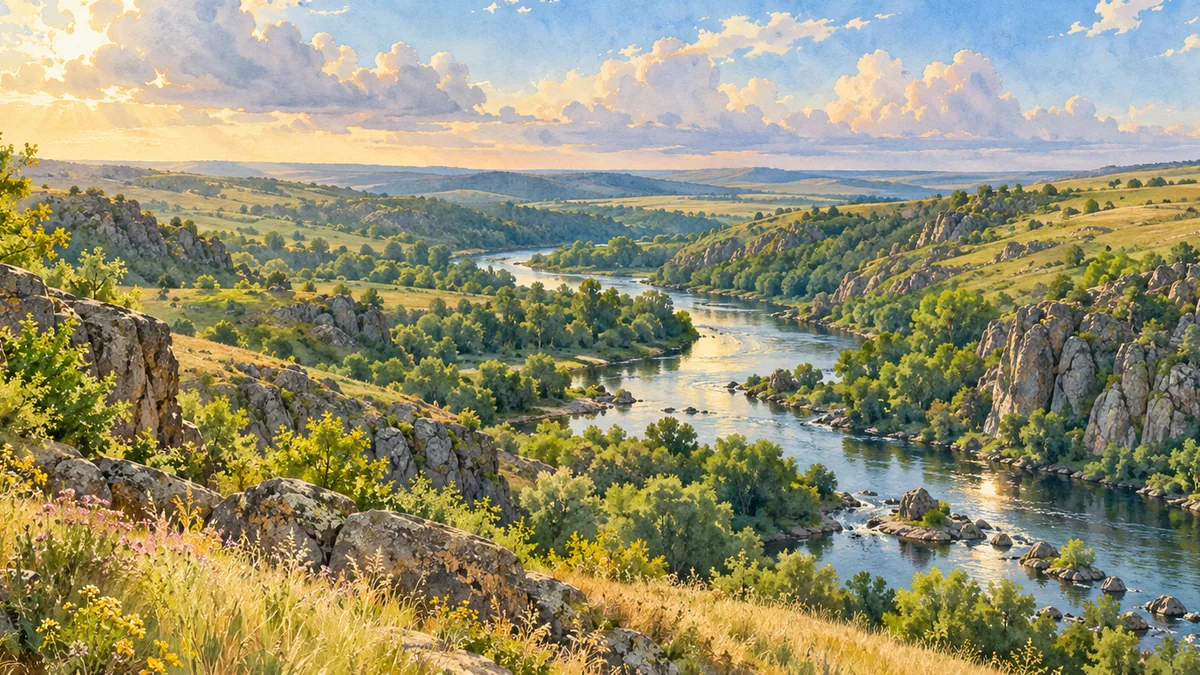
Dnipropetrovsk Oblast occupies a stretch of the middle and lower Dnipro basin. The river is a useful starting point for its history: it connected settlements, supplied food and water, and marked routes through the surrounding steppe. Long before modern factories, these lands formed part of the world of the Zaporozhian Cossacks. Imperial expansion and the destruction of the Sich in 1775 changed their political organization. The modern oblast is a much later administrative unit, so its boundary should not be read as the boundary of a single ancient people or historical region. River, settlement and state have repeatedly reshaped one another here.
An industrial landscape
The region’s later development depended heavily on its mineral resources. Iron ore around Kryvyi Rih and manganese near Nikopol helped make it one of Ukraine’s major industrial areas. Railways, manufacturing and expanding towns linked those resources to a much wider economy. The regional centre is Dnipro, while the oblast retains the name Dnipropetrovsk: city and oblast names are different. The Transfiguration Cathedral and the riverfront provide a visual counterpoint to mines and workshops. Together they suggest a regional history made from several overlapping landscapes, including urban planning, engineering, agriculture and the everyday communities that grew around these activities.
Petrykivka: history carried by the hand
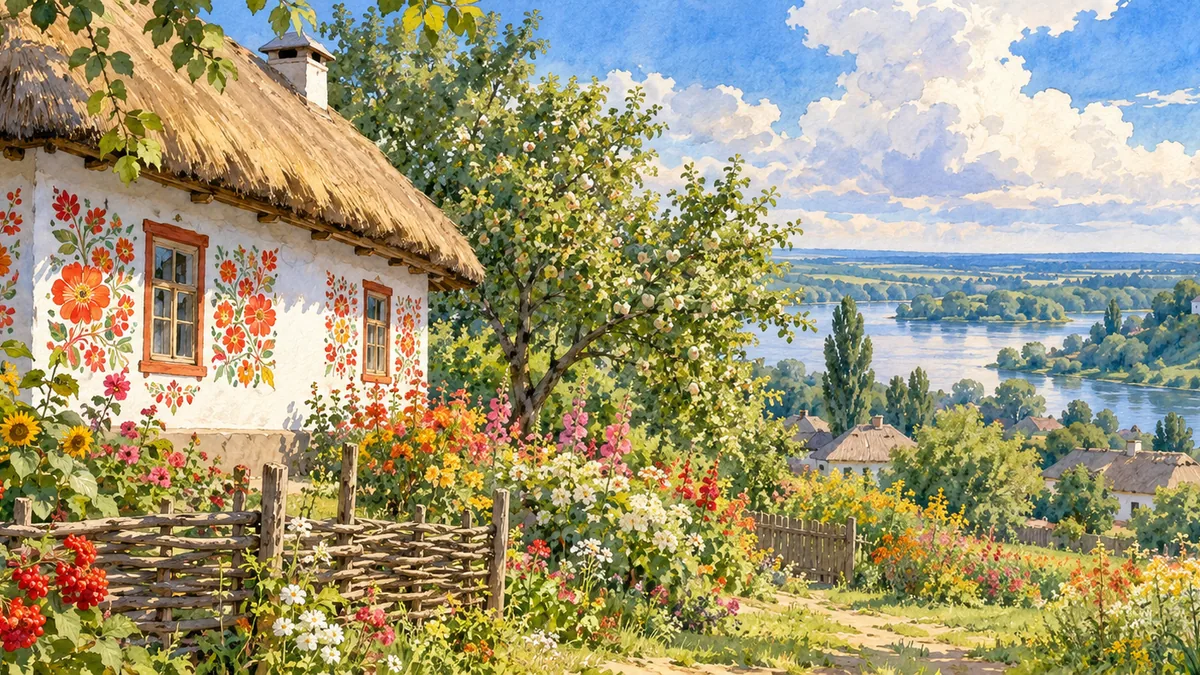
Petrykivka offers another way to understand this region. Its decorative painting tradition uses flowers, leaves, berries and birds, often organized into lively, balanced compositions. UNESCO inscribed the practice on its Representative List of the Intangible Cultural Heritage of Humanity in 2013. Skills are passed through families, local teaching and the work of practicing artists. The tradition matters because regional heritage is not confined to old buildings: it can survive in gestures, materials and shared visual knowledge. A painted flower can therefore serve as a meaningful companion to the river and industrial skyline when learning the name of this oblast. It remains a living practice.
Historical sources & artwork notes
AI-generated watercolor heritage illustrations interpret these places; they are not photographs or a record of present-day conditions.