Volyn Oblast — History and Landmarks
Волинська область
AI-generated watercolor interpretations of real places · AI-generated watercolor heritage illustrations interpret these places; they are not photographs or a record of present-day conditions.
Volyn and the wider Volhynian world
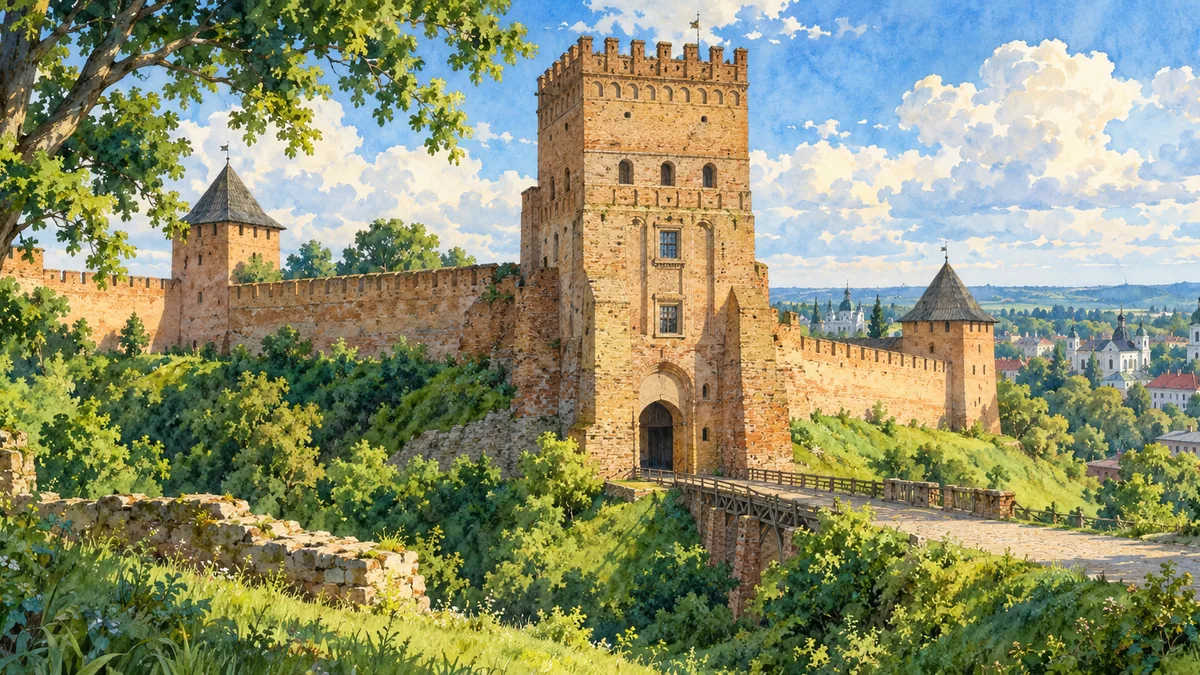
The modern Volyn Oblast is only one part of historical Volhynia. The older region also extends into neighbouring parts of Ukraine, so the two names are related without describing identical boundaries. Lutsk, the oblast’s centre, developed beside the Styr River and became an important town within the medieval Rus world. Later Lithuanian rule left a particularly visible mark on its defensive architecture. The castle associated with Liubartas, also called Lubart, is a reminder that this landscape connected several political and cultural traditions. Rivers and trading routes made towns meeting places, while the northern lake and forest country gave the region a very different character beyond its urban centres.
Lutsk: castle, trade and learning
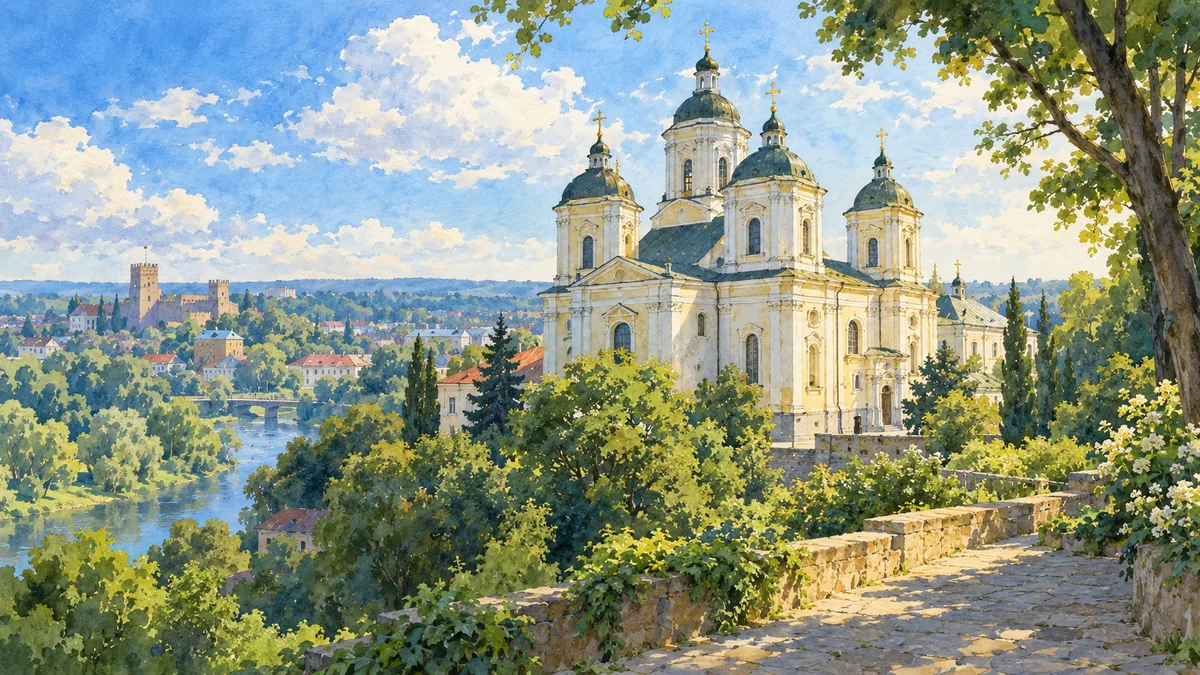
The brick towers of Lutsk Castle are the main landmark on this card. In the fifteenth and sixteenth centuries the town prospered through trade; Armenian and Karaite communities formed part of its diverse population. Lutsk also became a centre of religious education. Orthodox institutions, a brotherhood school and a Jesuit college reveal a history of both exchange and competition. The surviving churches and cathedral add later architectural layers to the medieval castle. This is why the city should not be imagined as belonging to a single frozen century. Its skyline combines defensive walls, sacred buildings and the changing demands of a regional administrative and commercial centre.
Lakes, borders and remembrance
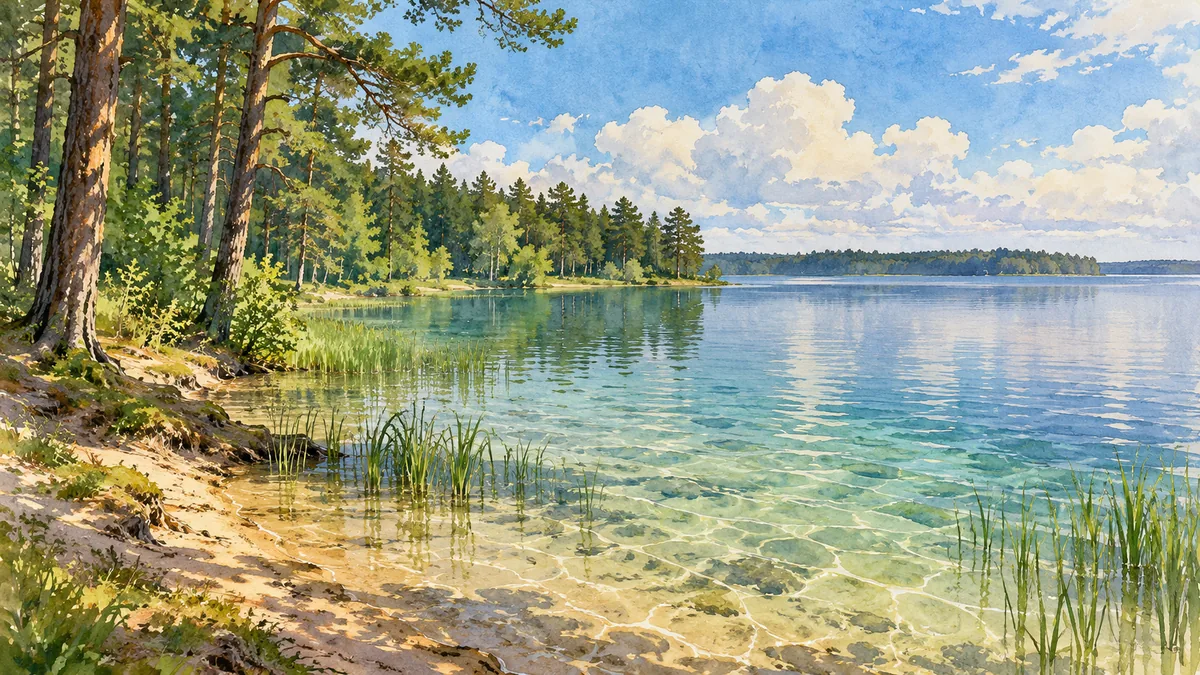
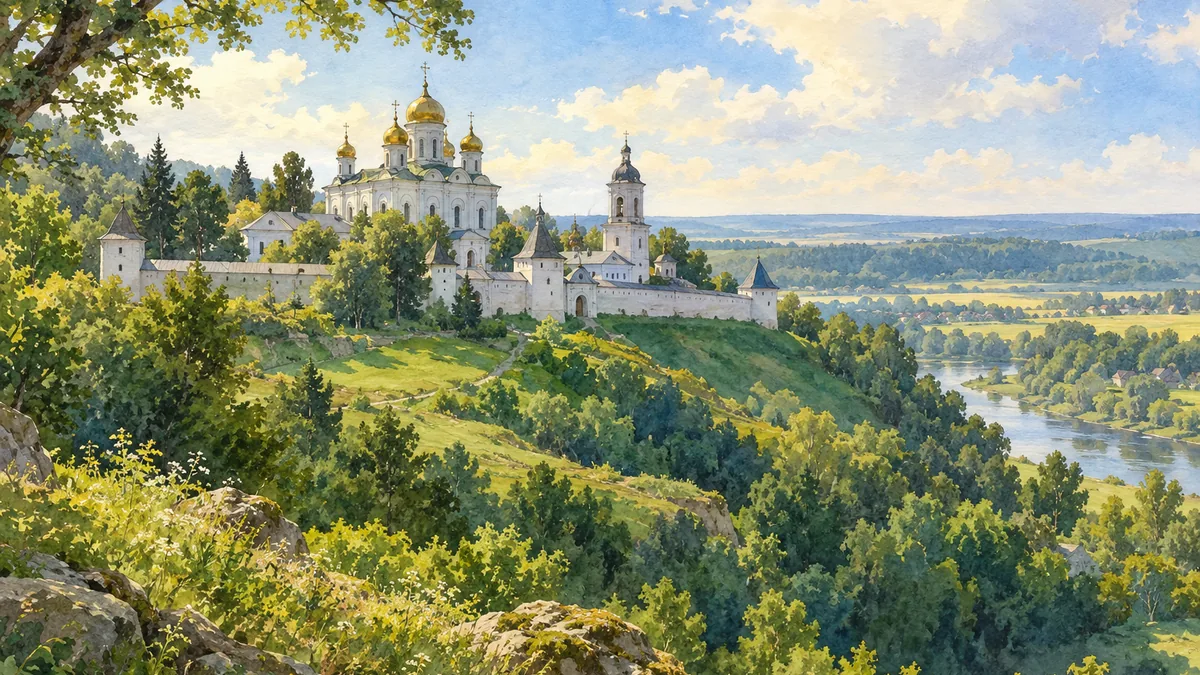
Lake Svitiaz introduces another side of Volyn: open water, sandy shorelines and pine woodland. The lake scene contrasts with the enclosed brick geometry of Lutsk and with the hilltop religious landscape at Zymne. These different settings help make the region memorable without reducing it to one famous building. Modern Volyn’s history also includes changing state borders, the interwar Polish period, Soviet rule and the catastrophic violence of the Second World War. Jewish communities were destroyed in the Holocaust, and the region witnessed severe interethnic violence. Its cultural heritage is best approached with attention to both the communities that continue here and those whose presence survives largely in memory and historical records.
Historical sources & artwork notes
AI-generated watercolor heritage illustrations interpret these places; they are not photographs or a record of present-day conditions.