Vinnytsia Oblast — History and Landmarks
Вінницька область
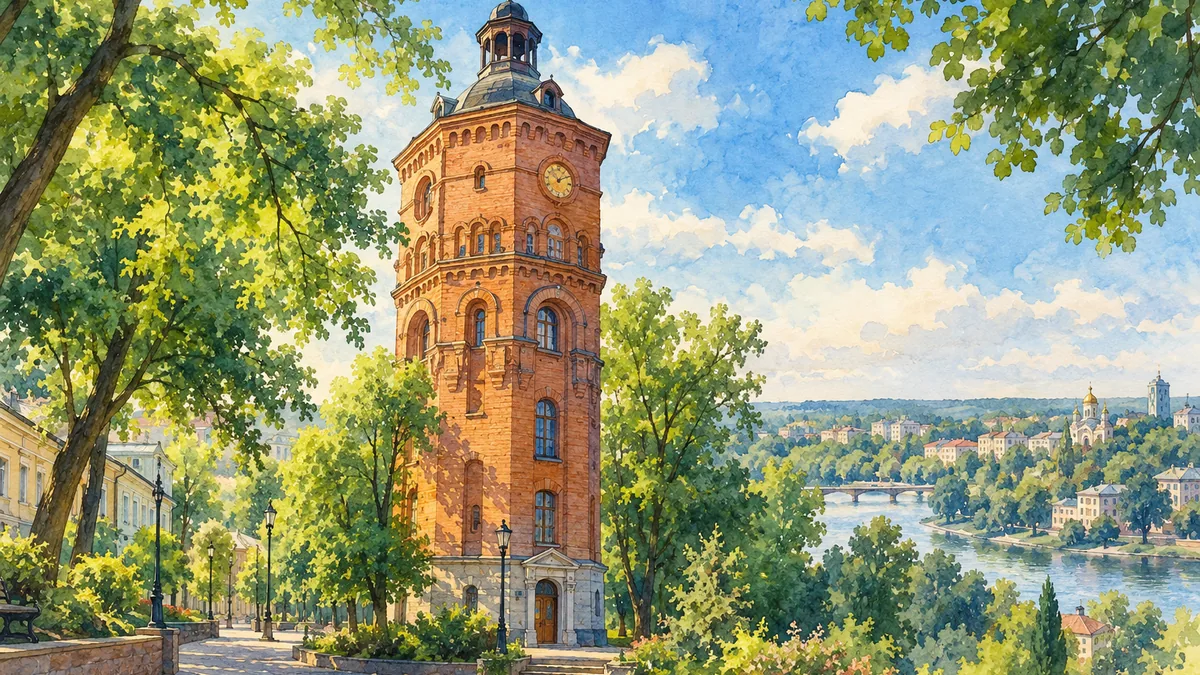
AI-generated watercolor interpretations of real places · AI-generated watercolor heritage illustrations interpret these places; they are not photographs or a record of present-day conditions.
Podilia beside the Southern Buh
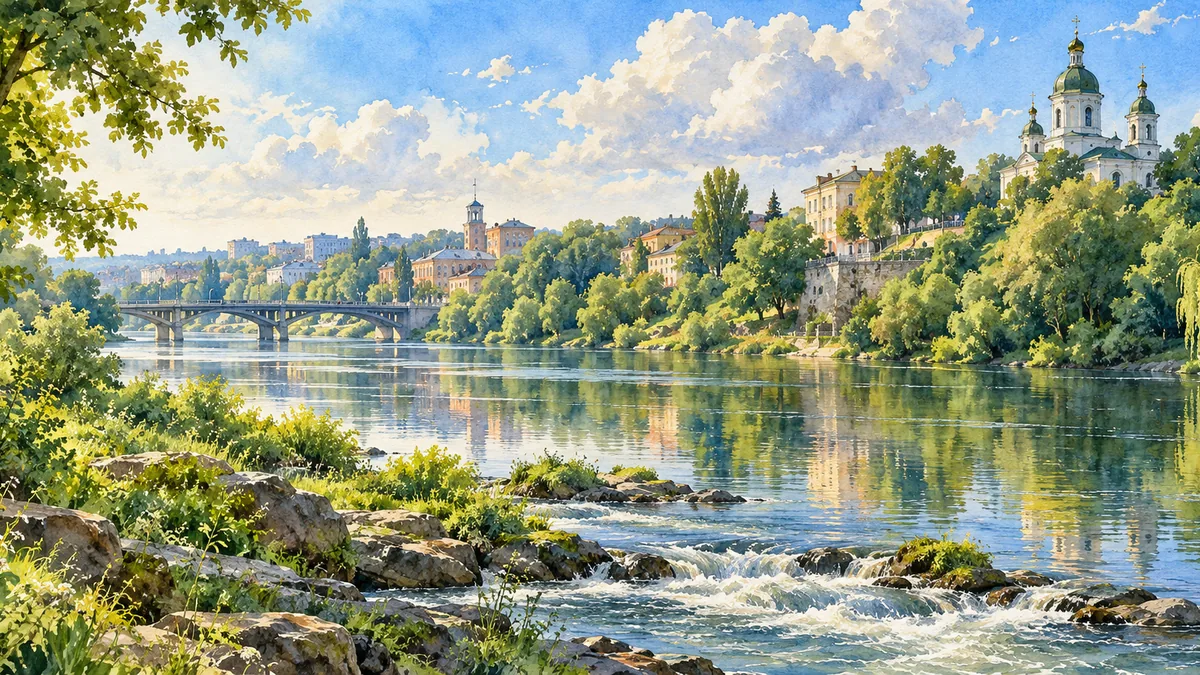
Vinnytsia Oblast occupies part of the historic region of Podilia, with the Southern Buh linking the regional capital to a landscape of farmland, wooded valleys and small towns. The modern oblast was established in 1932; its borders should not be confused with the much older cultural region. During the medieval period these lands belonged to Rus principalities and subsequently came under Lithuanian and Polish rule. Changes of government did not erase local settlement patterns: river crossings, market towns and agricultural communities remained important. Thinking of the region through its rivers helps explain why fortifications, mills, churches and trading centres often developed close together.
A city shaped by public life
Vinnytsia grew as a regional centre rather than around one royal monument. Its water tower, designed by the architect Hryhorii Artynov, is a useful symbol of that civic history. The red-brick structure in European Square connects the city’s architectural identity with the practical work of supplying an expanding urban population. Its appearance can resemble a castle tower, but its original purpose was modern infrastructure. That distinction makes it an especially helpful landmark for learning to read a city: buildings that now seem picturesque often began as answers to ordinary needs. The square and tower place everyday urban history beside the older story of Podilia.

Estates, fortifications and memory
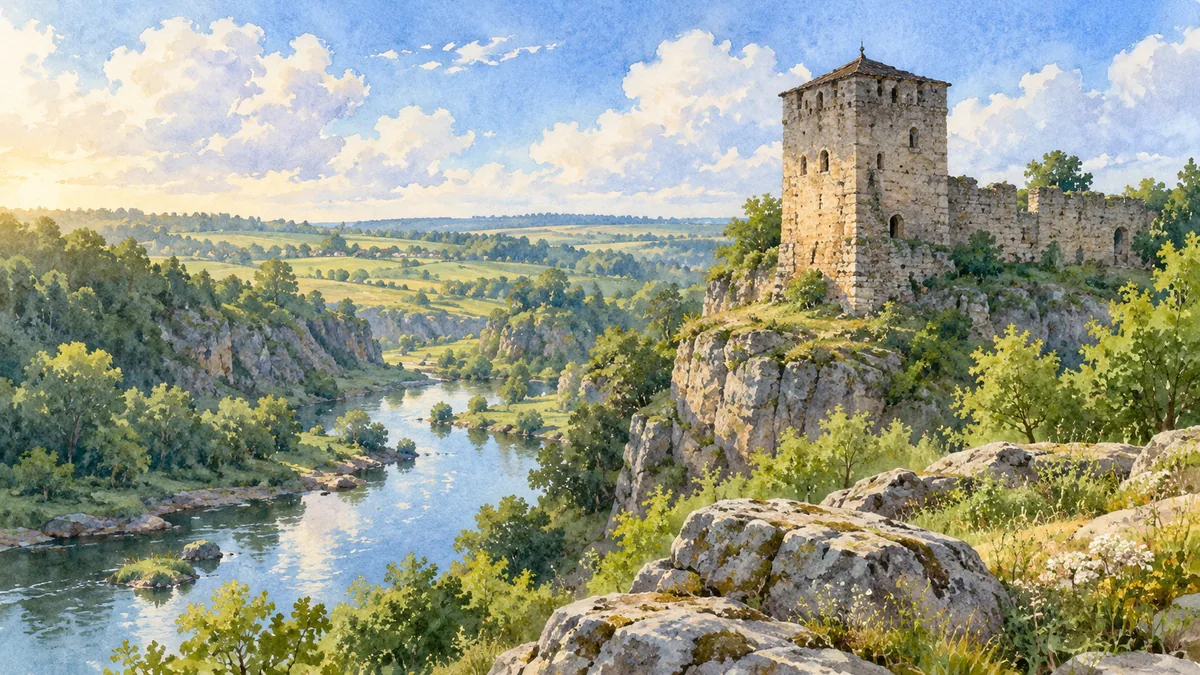
The wider oblast reveals contrasting kinds of heritage. Tulchyn’s Potocki palace represents the landed aristocracy and the formal architectural world of large estates. Busha’s surviving tower belongs to a different landscape of defence and conflict, associated with the upheavals of the seventeenth century. Alongside these monuments, the Southern Buh offers a view of the natural setting in which generations worked and travelled. The twentieth century brought Soviet rule, the Holodomor and the devastation of the Second World War. An account of the region therefore needs both attractive landmarks and an awareness of loss. These illustrations introduce places; they are artistic interpretations rather than records of every historical detail.
Historical sources & artwork notes
AI-generated watercolor heritage illustrations interpret these places; they are not photographs or a record of present-day conditions.